

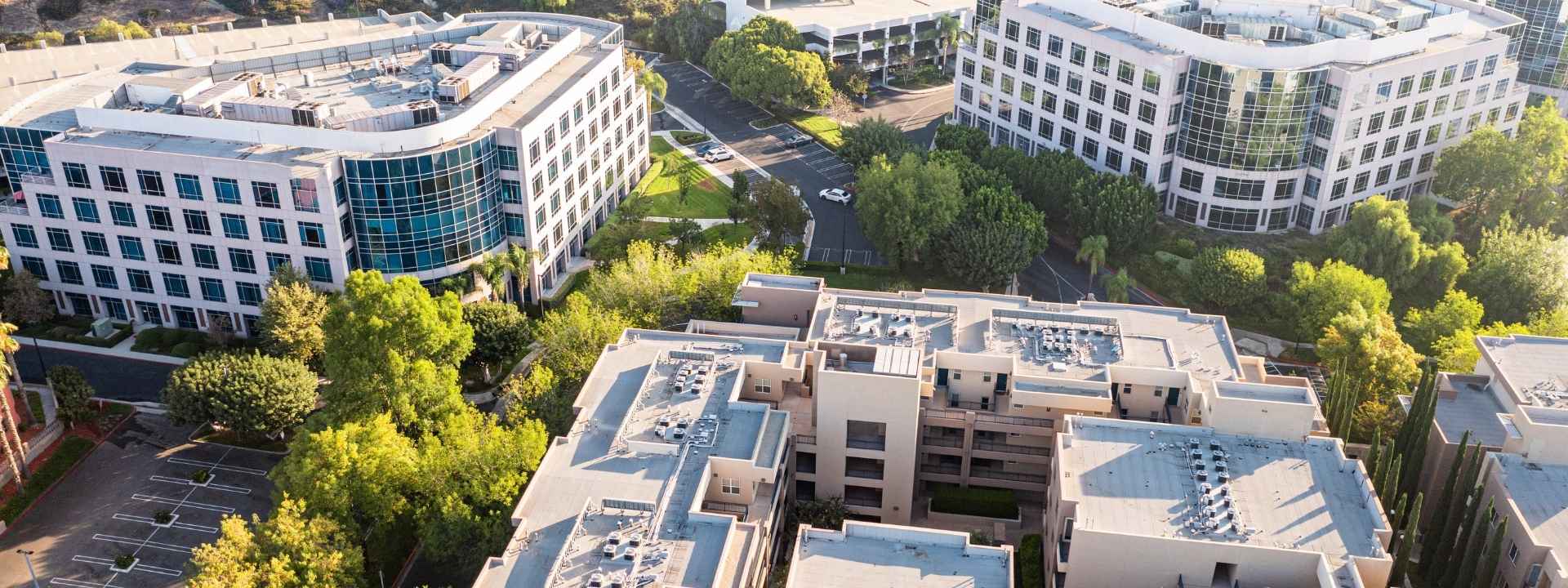
In the face of increasingly strict ESG requirements, manufacturing enterprises are paying attention not only to location but also to infrastructure quality when selecting factories and warehouses.
Among these, green-certified facilities are being prioritized thanks to their ability to optimize operating costs, satisfy partner requirements, and enhance competitiveness.
This trend is also taking place in many localities such as Bac Ninh, Dong Nai, and Binh Duong, where sustainable and eco-industrial parks are actively being developed.
In this article, KTG Industrial will introduce the prominent benefits of green buildings and why this model is increasingly chosen by manufacturing businesses.
Directly reducing factory operating costs
How much energy do manufacturers save?
According to the U.S. Green Building Council (USGBC), manufacturers owning LEED-certified facilities can save an average of 25% energy compared to conventional manufacturing facilities [1].
Besides energy, green buildings also help optimize operating budgets [1]:
- Maintenance costs: Reduced by nearly 20% compared to standard commercial buildings.
- Operating costs: Reduced by nearly an additional 10% in the first year following green retrofits.
Green buildings help businesses significantly reduce factory operating costs.
Water-saving solutions in green buildings
Green buildings help reduce water consumption by approximately 11% compared to conventional buildings, both optimizing operating costs and driving toward sustainable development (according to the U.S. Department of Energy across 22 LEED-certified projects) [1].
This saving is achieved through solutions such as rainwater harvesting, reusing non-potable water sources, and equipping water-efficient fixtures throughout the entire facility [1].
As a result, green buildings significantly reduce clean water consumption, saving utility costs while ensuring long-term operational efficiency.
How much higher is the cost compared to conventional factories?
Many businesses believe that green buildings equate to high investment costs. However, in reality, the cost difference compared to conventional buildings is not significant, while the value delivered during operation is substantial.
The initial construction cost of a sustainable facility is typically only about 2% to 5% higher than a conventional building. In return, businesses can lower electricity, water, and maintenance expenses throughout its lifespan [2].
Consequently, the additional initial investment can be offset by operational savings over time.
For businesses choosing ready-built factories, the benefits are even clearer. Solutions such as energy-saving systems, water management, or high-performance building materials are usually pre-integrated by the developer.
Meeting ESG requirements and complying with international regulations
Manufacturers using building certifications for ESG reporting
Green building rating frameworks such as LEED include performance metrics across environmental, social, and economic dimensions, providing a clear, data-driven means to standardize measurement and communicate progress.
By supporting certified buildings, businesses can save money, improve efficiency, reduce carbon emissions, and create healthier spaces for everyone. Therefore, LEED serves as a critical element in ESG reporting and a globally recognized framework for investors to measure and manage their real estate performance.
In addition, the market is increasingly demanding transparency and accountability regarding sustainability. Tenants will progressively seek environmental performance metrics (such as energy use intensity, electrification, and clean energy) alongside green certifications—a trend already underway in advanced European markets like London and Paris.
In this context, choosing green-certified spaces (such as LEED or BREEAM) and willingness to pay a “green premium” will help businesses meet rising market expectations while supporting their own low-carbon goals [3].
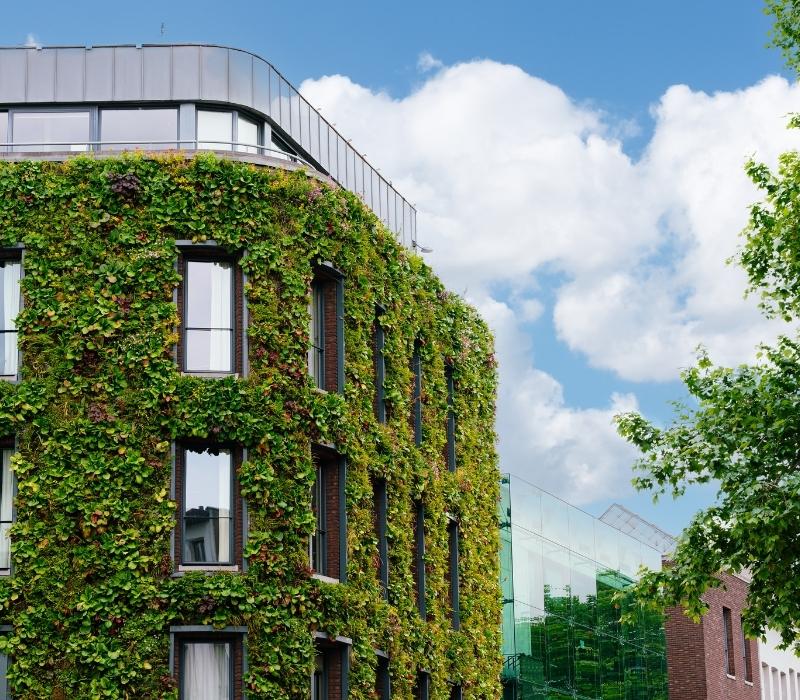
Green buildings support businesses in meeting international partner requirements.
Regulations are tightening globally
The market for sustainable buildings is moving faster than regulatory bodies due to tenant demand.
However, regulations are also increasing and becoming more stringent—both directly through building performance standards and indirectly through mandatory corporate disclosure requirements.
This momentum was further reinforced at COP28 (December 2023) with the launch of the Buildings Breakthrough initiative, which aims to make near-zero emission and climate-resilient buildings the new normal by 2030. This initiative gained support from 27 countries, the European Commission, and 18 international initiatives [4].
In the coming years, companies making no progress in addressing carbon footprints across their real estate portfolios will not be able to remain on the sidelines. Taking early action helps businesses maintain competitiveness, avoid financial penalties, and prevent reputational damage when new policies are enacted [4].
Climate risk is financial risk for manufacturers
Climate change not only increases extreme weather events but also costs businesses money. In the U.S., climate-driven extreme weather events have caused $612 billion in damages over the past 5 years, according to NOAA data [4].
However, climate risk remains a blind spot for some companies. According to JLL research in 2021, 78% of investors and 83% of tenants identified climate risk as a financial risk, yet a 2023 PwC survey showed that only 23% of CEOs had contingency plans for disruptions over the next 12 to 18 months [4].
Investing in resilience also yields clear economic benefits. According to the National Institute of Building Sciences (NIBS), every $1 invested in mitigation measures can save approximately $6 in post-disaster recovery and reconstruction costs [1].
By integrating green building solutions (such as using sustainable materials, climate-resilient design, rainwater harvesting, energy efficiency, and on-site renewable energy generation), businesses can mitigate the impacts of physical and transition risks on their assets. This helps minimize disruptions to workspace and business operations while ensuring corporate goals remain achievable [1].
Boosting productivity and retaining workers
Physical health and indoor air quality
Workers typically spend most of their working hours inside factories, where indoor air pollution levels can be 2 to 5 times higher than outdoors [5].
Green buildings address this issue by prioritizing modern ventilation systems and using low-toxin-emitting materials. As a result, businesses can significantly reduce health issues related to allergies, asthma, and respiratory diseases, contributing to lower worker sick leave rates [1].
Indoor air quality in factories directly affects labor productivity.
Mental well-being and spatial design
Beyond physical health, green spatial design also positively impacts employee morale. Optimizing natural light, improving air circulation, and integrating green spaces help reduce stress, anxiety, and improve mood at work [6].
These enhancements help workers feel happier, increase engagement levels, and boost overall labor productivity [1].
KTG Industrial: A joint venture developing green industrial real estate
As a joint venture between Vietnam’s Khai Toan Group (KTG) and Singapore’s Boustead Projects, KTG Industrial provides industrial real estate solutions oriented toward sustainable development, including ready-built factories, ready-built warehouses, and built-to-suit facilities.
The combination of local market development experience and international standards enables KTG Industrial to deliver projects that meet the operational demands of manufacturing enterprises across various sectors.
In addition to prioritizing infrastructure quality, KTG Industrial integrates green building solutions to optimize energy efficiency, conserve resources, and support businesses in meeting ESG goals.
With land funds in major industrial hubs across Northern and Southern Vietnam, KTG Industrial aims to accompany enterprises in their journey toward sustainable production development.
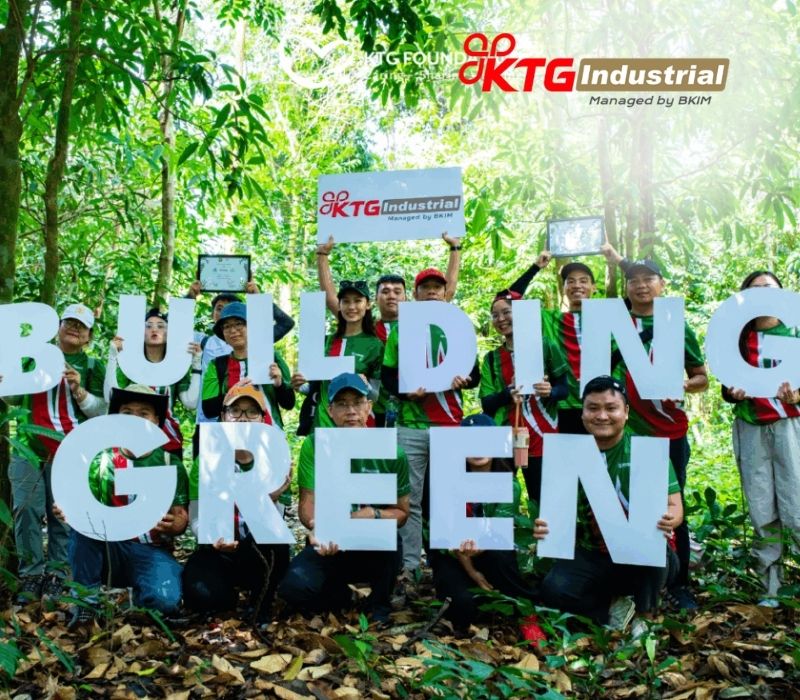
KTG Industrial accompanies sustainable manufacturing.
Conclusion
Green buildings help businesses reduce operating costs while boosting competitiveness, fulfilling ESG standards, and adapting to global sustainable development trends.
For businesses seeking factories or warehouses, choosing projects developed with a green orientation is an effective solution to optimize manufacturing efficiency and lay a foundation for long-term growth.
With a system of ready-built factories and warehouses in key industrial hubs, KTG Industrial stands ready to partner with businesses on their journey toward building sustainable and efficient manufacturing operations.
References
[1] USGBC. Benefits of green building.
https://www.usgbc.org/press/benefits-of-green-building
[2] SUNPEAK Construction. Green Building Cost Savings – How Green Building Practices Reduce Costs for Businesses.
[3] USGBC. Meeting ESG goals through green building.
https://www.usgbc.org/about/priorities/esg
[4] World Economic Forum (2024). Why 2024 is the tipping point for investing in sustainable buildings.
https://www.weforum.org/stories/nature-and-biodiversity/sustainable-office-buildings/
[5] Ecochain (2025). What Is Green Building and Its Core Principles.
[6] Laura Coll (2024). Green Buildings on the Rise: Why Building Products Matter. Sustainalytics.
https://www.sustainalytics.com/esg-research/resource/investors-esg-blog/green-buildings-on-the-rise–why-building-products-matter