

Vietnam is entering a phase of industrial growth increasingly aligned with sustainable development standards.
In this context, low-carbon industrial infrastructure is becoming an important competitive advantage as manufacturing businesses face growing environmental and emissions requirements from export markets and international partners.
In this article, KTG Industrial Managed by BKIM introduces low-carbon infrastructure, explains the role of this model, and examines its practical value for manufacturing businesses in the evolving industrial landscape.
What is low-carbon industrial real estate?
Low-carbon industrial real estate refers to an infrastructure system comprising factories, warehouses, and industrial parks (IPs) that are planned, constructed, and operated with the objective of reducing carbon emissions. Solutions can be implemented throughout a facility’s lifecycle, from material selection and construction to energy consumption and day-to-day operations.
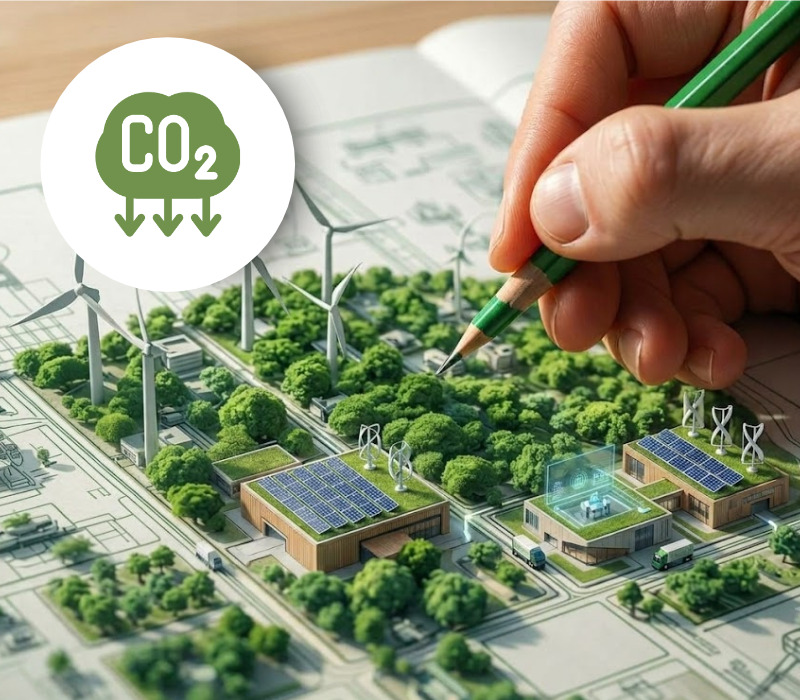
Low-carbon industrial infrastructure for sustainable development.
Common models in the market
- Energy-efficient ready-built factories: Maximize the use of natural lighting and ventilation, while incorporating thermal insulation materials to reduce reliance on industrial cooling systems.
- Green-certified logistics warehouses: May be assessed under certification systems such as LEED or EDGE, based on criteria related to reducing electricity and water consumption and optimizing waste management processes.
- Industrial parks integrated with renewable energy: Infrastructure is pre-planned to accommodate rooftop solar power systems combined with battery energy storage systems (BESS), providing a stable supply of clean electricity for manufacturing operations.
Measurement and certification standards
Determining whether a factory meets low-carbon standards requires an independent assessment based on relevant international certification systems and technical regulations.
- International certification systems and standards: LEED and EDGE are used to assess the environmental performance of buildings based on their respective criteria, while ISO 14001 is a standard for an organization’s environmental management system.
- Domestic policy framework: Criteria related to resource efficiency, emissions reduction, and environmental management within eco-industrial parks (EIPs) help guide the development of sustainable industrial infrastructure in Vietnam.
Why is low-carbon industrial real estate gaining momentum in Vietnam?
The rapid growth of low-carbon industrial real estate in Vietnam is not a temporary trend, but an inevitable transition driven by the following four core factors:
The shift toward greener global supply chains
The strong growth of the industrial and trade sectors in recent years has driven demand for clean, modern, and sustainable energy infrastructure. This also provides an important foundation for businesses to improve operational efficiency and adapt to the global economy’s transition toward greener practices.
Alongside this trend, export markets are placing increasing emphasis on carbon emissions across supply chains. A notable example is the European Union’s (EU) Carbon Border Adjustment Mechanism (CBAM), which is gradually incorporating carbon emission costs into trade activities and encouraging businesses to adopt lower-emission production processes.
Global corporations such as Apple, Samsung, and Nike are accelerating their Net Zero strategies while strengthening emissions management across their entire value chains, including Scope 3 emissions.
In this context, adopting clean energy and ensuring transparency in factory-level carbon data are increasingly becoming important competitive advantages. These measures help businesses meet partner expectations, strengthen their positions within supply chains, and pursue sustainable growth.

Net Zero is becoming a strategic objective for global corporations
National commitments and the regulatory framework
At the COP26 Conference, the Vietnamese Government committed to achieving net-zero emissions (Net Zero) by 2050, setting a direction for the green transition across multiple sectors, including industrial infrastructure development. Alongside this commitment, the policy framework for eco-industrial parks (EIPs) is also being progressively developed to promote more energy- and resource-efficient production models.
Emissions reduction, energy efficiency, and resource circularity are receiving increasing attention in factory planning, investment, and operations.
Integrating these solutions from the design stage enables businesses to improve resource efficiency, work toward sustainable development goals, and strengthen their ability to adapt to the industrial sector’s transition toward greener practices.
Shifting dynamics in the leasing market
High-quality FDI inflows into high-tech, semiconductor, electronics, and logistics sectors are fundamentally changing industrial property selection criteria. Major tenants increasingly prioritize factories with internationally recognized green certifications, such as LEED and EDGE.
This advantage enables low-carbon industrial parks to achieve significantly faster occupancy rates while commanding rental rates 10–15% higher than those of conventional factories [1].
Financing opportunities from green capital sources
International green capital flows are creating additional opportunities to mobilize resources for the development of low-carbon industrial infrastructure in Vietnam.
One example is the Vietnam Industrial Decarbonization Accelerator (VIDA), developed by Allotrope Partners. According to the Global Innovation Lab for Climate Finance, VIDA is structured as a USD 24.5 million private debt fund designed to provide financing to mid-sized project developers implementing renewable energy solutions in industrial parks across Vietnam before reaching a final investment decision (FID) [2].
Notable projects promoting the development of low-carbon industrial real estate in Vietnam
The shift toward low-carbon industrial real estate is already taking shape in the market, with several notable projects in Vietnam demonstrating the practical application of this model.
VSIP III Industrial Park (Binh Duong)
VSIP III Industrial Park in Binh Duong is an example of the growing trend toward integrating renewable energy into industrial infrastructure. The project includes plans for a 50-hectare on-site solar farm to supply electricity to tenants within the industrial park [3].
LEGO selected VSIP III as the location for its manufacturing facility in Vietnam, with a total investment of approximately USD 1 billion [4]. On September 17, 2025, LEGO Manufacturing Vietnam and VSIP announced a direct power purchase agreement (DPPA), combining solar power with a battery energy storage system to work toward the goal of operating the factory entirely on renewable energy [5].
Nhon Trach VI Industrial Park (Dong Nai)
Vietnam Industrial Park Group is developing a high-quality ready-built warehouse project in Sub-zone D of Nhon Trach VI Industrial Park, with a planned total leasable floor area of more than 97,000 m².
The project is designed to achieve LEED Gold certification, demonstrating a commitment to green building development, energy efficiency, and minimizing environmental impacts, while meeting the sustainability requirements of international investors.
KTG Industrial and its sustainable development strategy
Amid the green transition, KTG Industrial is gradually developing industrial infrastructure with a low-carbon orientation to meet businesses’ increasingly stringent requirements for energy efficiency and sustainable development.
As a joint venture between Khai Toan Group (Vietnam) and Boustead Projects (Singapore), KTG Industrial operates within the BKIM ecosystem, combining industrial real estate development experience with a commitment to building infrastructure aligned with ESG criteria. Its factory and warehouse projects are developed to serve the diverse needs of businesses, particularly those in high-tech, electronics, and logistics sectors, where operational efficiency and environmental standards are receiving increasing attention.
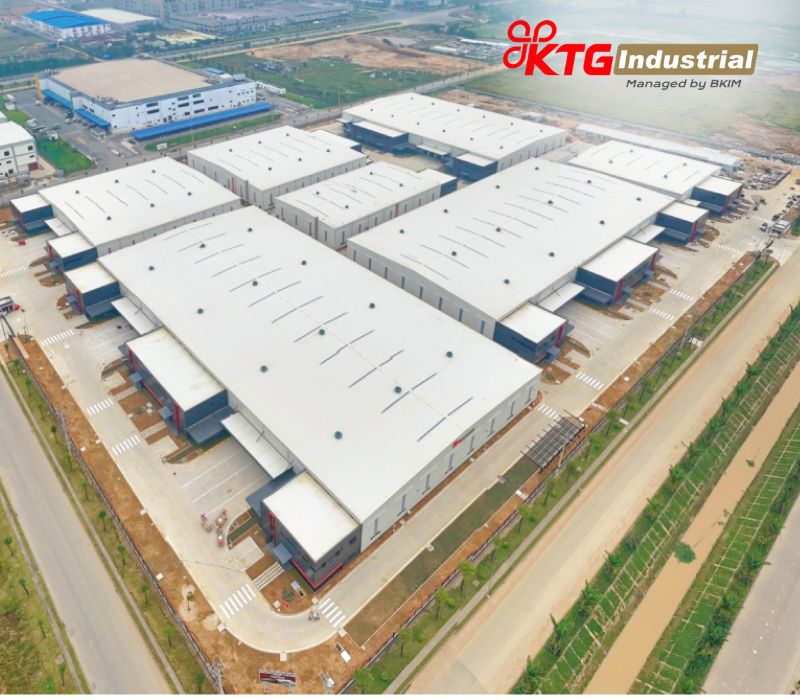
Overview of the KTG Industrial VSIP Bac Ninh II project
KTG Industrial VSIP Bac Ninh II Phase 1 is one of the notable projects reflecting this development strategy. Built to LEED Gold standards, the project offers production space with a total leasable area of up to 43,892 m², enabling businesses to access green-standard industrial infrastructure.
Located within VSIP Bac Ninh II Industrial Park, the project also benefits from connectivity to key economic areas, making it suitable for investors seeking to establish manufacturing operations and expand their supply chains.
Conclusion
Low-carbon industrial real estate is becoming an important development direction in Vietnam as environmental standards increasingly influence international businesses’ decisions on manufacturing locations and investment destinations.
In the coming years, the EU’s CBAM mechanism, Vietnam’s commitment to achieving Net Zero by 2050, and multinational corporations’ Scope 3 emissions reduction targets will continue to accelerate this transition.
Industrial projects developed with a low-carbon orientation have greater opportunities to strengthen their competitiveness, attract high-quality FDI, and maintain their appeal to long-term tenants. Proactively incorporating green criteria from the development stage will therefore be an important factor in helping developers adapt to evolving market requirements.
References
[1] Bat dong san cong nghiep: Chu dong nam bat co hoi trong vong xoay bien dong. (2026). Baodautu. https://baodautu.vn/bat-dong-san-cong-nghiep-chu-dong-nam-bat-co-hoi-trong-vong-xoay-bien-dong-d708612.html
[2] Vietnam Industrial Decarbonization Accelerator (VIDA) | The Global Innovation Lab for Climate Finance. (2026). The Global Innovation Lab for Climate Finance. https://www.climatefinancelab.org/ideas/vietnam-industrial-decarbonization-accelerator-vida/
[3] Tin, anh: Thao Nguyen. (2022). Khoi cong Khu cong nghiep VSIP III – Binh Duong. Bao Dien Tu Tuoi Tre. https://tuoitre.vn/nld/thoi-su/khoi-cong-khu-cong-nghiep-vsip-iii-binh-duong-2022031908355596.htm
[4] Tuan, M. (2025). Khanh thanh nha may LEGO trung hoa carbon dau tien tren the gioi. Bao Hanoi moi. https://hanoimoi.vn/khanh-thanh-nha-may-lego-trung-hoa-carbon-dau-tien-tren-the-gioi-698415.html
[5] Trinh Binh. (2025). VSIP ky ket thoa thuan mua ban dien truc tiep voi LEGO Manufacturing Viet Nam nham thuc day phat trien ben vung. Bao Nhan Dan Dien Tu. https://nhandan.vn/vsip-ky-ket-thoa-thuan-mua-ban-dien-truc-tiep-voi-lego-manufacturing-viet-nam-nham-thuc-day-phat-trien-ben-vung-post908675.html