

The structure of an industrial factory is a core element that directly affects the durability, load-bearing capacity, and operational performance of the facility. Choosing the right type of structure not only helps optimize construction costs but also ensures stable and safe production operations. In this article, KTG Industrial will explore the technical requirements and common types of structures according to Vietnamese construction standards.
Concept of industrial factory structure
The industrial factory structure is the main load-bearing system that helps keep the facility stable, durable, and capable of meeting the technical requirements during production. This structural system includes components such as the foundation, columns, beams, roof trusses, roof, and floors. Each element plays a crucial role in distributing loads and resisting environmental impacts.
In the factory construction process in Vietnam, strict compliance with structural standards is essential.
According to the National Standard TCVN 5575:2012, the design standards for structures must be calculated based on their load-bearing capacity, stability, durability, and functionality over the design lifespan. Additionally, for industrial factories using steel frames, the structure must ensure fast assembly, flexibility for expansion, and suitability for the specific manufacturing needs of each industry.
What does the structure of an industrial factory include?
The structure of an industrial factory consists of components such as the foundation, columns, beams, roof trusses, roof, and floors, which play a crucial role in ensuring the stability, durability, and safety of the facility throughout its operational life. When constructing a factory, adhering to legal regulations and technical standards is mandatory to ensure the quality of the structure and the safety of workers.
According to Decree 06/2021/ND-CP and the 2014 Construction Law (amended in 2020), industrial facilities must be designed, reviewed, and constructed in compliance with current technical standards. Some important standards that must be applied include:
- TCVN 5575:2012 (Steel Structure – Design Standards)
- TCVN 2737:1995 (Load and Impact)
- QCVN 06:2022/BXD (Fire Safety)
- QCVN 01:2021/BXD (Construction Planning)
- QCVN 03:2023/BXD (Classification and Classification of Construction Works)
Steel columns and beams
Columns and beams are the main load-bearing components in the industrial factory structure, and they play a key role in transmitting the load from the roof and floor to the foundation. In modern factories, steel columns and beams are preferred due to their high load-bearing capacity, ease of fabrication, and quick installation.
Factory foundation structure
The foundation structure of industrial factories is typically constructed using reinforced concrete to ensure durability and long-term load-bearing capacity. This component is located at the lowest part of the structure and plays a crucial role in distributing the load from the building evenly and safely to the ground. Depending on the geological characteristics of the area, the load requirements, and the scale of the factory, common types of foundations such as isolated foundations, strip foundations, raft foundations, or pile foundations are selected and designed accordingly.
The foundation structure must be designed to ensure the stability and durability of the building. The elevation difference of the foundation surface should correspond to each type of column as follows:
- Steel columns: 0.2m difference
- Reinforced concrete columns: 0.15m difference
- Wall-inserting frame columns: 0.5m difference
Pile foundations need to be designed with expansion joints to reduce the effects of deformation. Additionally, materials that are heat-resistant and corrosion-resistant are used to protect the foundation from environmental factors.
Beams
Beams are horizontal structural components in industrial factories, responsible for receiving and transmitting the load from the roof, floor, or walls to the columns. Depending on the overall structure and the load requirements, beams can be made from structural steel, composite steel, or reinforced concrete.

Beams are installed to form the load-bearing frame for the entire structure
Roofing and insulating materials
The roof of an industrial warehouse is not only the top protective layer of the building but also plays an important role in heat resistance, waterproofing, and regulating the internal temperature. Roofs are commonly covered with corrugated iron, insulated panels, PU panels, or other lightweight materials with integrated insulation layers.
When designing the roof of an industrial warehouse, the roof slope standard must be suitable for the type of material used, as follows:
| Type of roofing material | Standard pitch (%) |
| Asbestos cement roofing sheets | 30% – 40% |
| Corrugated metal sheets | 15% – 20% |
| Roof tiles | 50% – 60% |
| Reinforced concrete | 5% – 8% |
Additionally, for reinforced concrete roofs with a slope of less than 8%, it is mandatory to include thermal expansion joints in the waterproof concrete layer, with a distance between joints greater than 24m along the vertical length of the building.
In cases where the roof is designed as a single span with a width not exceeding 24m and the column height is below 4.8m, rainwater can flow freely without the need for downspouts. However, if the column height exceeds 5.4m, the roof must be designed with additional downspouts to direct rainwater to the ground.
For designs with skylights or stepped roofs with a height difference of 2.4m or more, gutters and downpipes are required for rainwater drainage. In the case of a mixed roof design for both lighting and ventilation, vertical glass installation is required. Additionally, the length of the skylight should not exceed 8.4m and must be recessed from the end column of the building.
Main frame (rafter, column)
The main frame of an industrial building, which includes components such as the rafters and columns, plays a crucial role in ensuring the stability and load-bearing capacity of the entire structure. The rafter is a horizontal structural element that bears the load from the roof and transfers this load down to the columns.
The columns, positioned along the length of the building, are responsible for bearing vertical loads and transferring these loads down to the foundation. Depending on the scale and technical requirements of the building, the main frame can be designed using various materials such as steel, reinforced concrete, or a combination of these materials.
Floor and foundation of industrial buildings
The floor and foundation of an industrial building play a crucial role in maintaining the stability and operational efficiency of the structure. These components directly bear the loads from structural elements and equipment throughout the production process. Therefore, the design of the foundation and floor must ensure factors such as durability, stability, and the ability to distribute loads evenly.
Depending on the geological conditions and technical requirements, the foundation may be constructed using reinforced concrete or other methods, while the floor must be resistant to abrasion and have good load-bearing capacity, especially in areas with heavy loads.
To ensure the foundation’s durability and load-bearing capacity, the design must adhere to strict technical and material standards. If the building is situated on weak soil, ground improvement methods such as soil reinforcement or the use of pile foundations are necessary to ensure stability.
The foundation must include a hard layer with a minimum thickness of 0.1m, enhancing its load-bearing capacity and water resistance. Concrete foundations should include steel reinforcement to resist impacts and offer protection against corrosion from acids, alkalis, or chemicals.
Additionally, designing an efficient drainage system is vital to prevent water accumulation and protect the long-term integrity of the foundation. The foundation should also be divided into smaller sections with a maximum size of 0.6m, with bitumen inserted between joints to minimize cracking.

The floor slab of the industrial building must be constructed securely to ensure load-bearing capacity and long-term structural stability
Walls and partition systems
Walls and partitions in industrial factories must meet stringent technical requirements to effectively divide space and shield production areas from external influences. Depending on the intended use, walls can be constructed from materials such as reinforced concrete, bricks, or insulated panel boards.External walls must be water-resistant, corrosion-resistant, and capable of withstanding environmental factors such as rain, wind, and humidity.
When it comes to partitions, flexibility in space division is a key consideration. Partitions must be lightweight yet structurally sound, and they should allow for easy installation, removal, or reconfiguration to accommodate shifting production demands. Materials used for partitions must also offer good sound and thermal insulation, especially in areas that require occupational safety compliance or noise reduction.

In large-scale factories, the internal space must be divided using partition systems
Canopy roofs and skylights
In industrial facility design, canopy roofs and skylights must be carefully planned to ensure long-term efficiency and durability. Canopy roofs, typically installed at entryways or outdoor service areas, require an appropriate slope and must be constructed from weather-resistant materials such as corrugated metal, steel, or composite panels. The slope must be precisely calculated to ensure effective rainwater drainage and prevent water accumulation that could damage the structural integrity of the facility.

Beyond their functional role, canopy roofs also enhance the overall aesthetic appeal of the factory
Skylights serve as a practical solution to increase natural lighting within production areas, contributing to reduced energy costs for illumination. However, skylights must be designed to regulate daylight effectively, preventing overheating and glare during peak sunlight hours. The materials used for skylights should offer excellent thermal insulation and be easy to maintain, ensuring that they do not disrupt production activities.
Bracing system
The bracing system plays a critical role in enhancing the structural stability of industrial buildings, especially those constructed with steel or reinforced concrete frames. Bracing is designed to prevent deformation or misalignment of the structure, thereby maintaining the uniformity and long-term durability of the entire facility.
This system may include steel rods, tension cables, or other structural components that connect columns, beams, and other key parts of the building frame. It ensures even load distribution and mitigates lateral forces caused by wind, seismic activity, or external impacts.
Anchor bolts
Anchor bolts are used to secure structural components of the factory to the foundation, significantly improving the overall stability and strength of the building. These bolts are typically made from high-tensile steel and treated with anti-corrosion coatings to extend their service life.
In both the design and installation phases, it is essential to select bolt sizes and materials that meet the specific load-bearing and flexibility requirements of the facility. Notably, all anchor bolts must be tightened to precise torque specifications to prevent loosening, which could compromise structural stability.

Anchor bolts are essential elements in maintaining the structural integrity of industrial buildings
Additional structural elements
In addition to primary structural components such as columns, beams, roofing, and foundations, several other key elements play a significant role in ensuring the stability and operational efficiency of industrial facilities. One essential aspect is the ventilation system, which improves air quality and helps maintain a stable indoor temperature.
To achieve optimal airflow, solutions such as ventilation louvers, exhaust fans, and skylights can be implemented. These features contribute to creating a more comfortable working environment for employees and, in turn, enhance overall productivity.
Structural characteristics of industrial facilities
The structural characteristics of industrial factories encompass several key components, including roofing, perimeter walls, structural frames, foundations, and entryways.
Factory roofing: Industrial roofs are typically designed with an appropriate slope to ensure efficient rainwater drainage and protection from weather elements. Common roofing materials include corrugated metal sheets, tiles, or reinforced concrete—each selected based on durability, load-bearing requirements, and long-term maintenance considerations.
Perimeter walls: Perimeter walls serve both protective and functional roles. In addition to shielding the facility from external conditions, these walls must offer insulation, soundproofing, and waterproofing to maintain an optimal indoor environment for production activities.
Structural frame: The structural frame of a factory is usually constructed from steel or reinforced concrete, depending on the load-bearing requirements and the specific nature of the production line. A well-engineered frame is crucial for ensuring the overall stability and longevity of the building.
Foundations: The foundation must be precisely calculated to handle the expected loads and remain stable throughout the building’s lifecycle. Design must align with the geological conditions of the site to ensure structural safety and efficiency.
Doors and windows: Doors and windows in industrial facilities must meet multiple operational and environmental demands. These include allowing for natural lighting, effective ventilation, and safeguarding the facility from external influences. Ease of access and secure opening and closing mechanisms are also essential for operational flow.
When designing doors and windows for an industrial facility, several technical standards should be considered:
- The main entry door should not exceed 2.4 meters in height from the floor and must allow for smooth opening and closing.
- Windows positioned higher than 2.4 meters require fixed frames to improve storm resistance. In some cases, additional clamped or mechanically adjustable window systems may be necessary.
- Beyond size and structural integrity, the design must also accommodate lighting systems, ventilation, and fire safety requirements.
Additionally, proper design of the roof drainage system is essential to prevent water accumulation that could compromise the structure.
Telecommunication systems—including cable TV, internet, and telephone lines—should also be planned to support the daily operational needs of the facility.
Cooling and ventilation systems: Door and window design should facilitate efficient airflow to reduce indoor temperatures and create a comfortable working environment for employees. Solutions such as exhaust fans, ventilation louvers, and skylights can significantly enhance air circulation. In facilities with high-intensity production, the ventilation system must be strong enough to eliminate heat, smoke, and airborne pollutants effectively.

Using industrial fans for cooling is a widely adopted and cost-effective solution
On a multi-functional space: Factories can flexibly change their usage purposes during operation to meet different production requirements. This requires the design to optimize space and allow structural changes without affecting the durability and safety of the facility.
Basic technical systems: Electricity, water, and fire protection systems need to be integrated into the structural design of the factory from the beginning. The electrical system must be arranged to ensure a stable and safe power supply for production equipment.
The water system must provide sufficient water for production activities and hygiene throughout the operation. At the same time, the fire protection system must be designed under safety standards, with equipment such as sprinklers, fire alarm systems, and marked emergency exits, ensuring absolute safety for workers and factory assets.
Basic technical requirements in industrial building structural design
Factory structure with load-bearing capacity
Basic technical requirements in industrial building structural design encompass multiple key factors to ensure the durability and safety of the facility. One of the core elements is that the factory structure must have strong load-bearing capacity, capable of withstanding both static and dynamic loads during production.
This requires precise calculations of factors such as loads from machinery, equipment, stored materials, as well as environmental loads like wind, earthquakes, and other external forces.
The factory structure must be designed so that its load-bearing capacity depends not only on the materials used (such as steel or reinforced concrete) but also considers long-term durability, structural stability, and the even distribution of loads across components like columns, beams, and foundations.
Accurate calculation and structural design help minimize deformation and cracking throughout the building’s operational lifecycle, ensuring safety for workers and protecting the enterprise’s assets.
Strong resistance to external environmental factors
The factory must be able to withstand harsh climate conditions such as extreme heat, storms, strong winds, and high humidity without disrupting production or damaging the facility. To achieve this, the use of corrosion-resistant, waterproof, and moisture-proof building materials is crucial. Structural components like the roof, walls, and doors must be designed to endure the impacts of weather.
In addition, the rainwater drainage system must be properly designed to protect the facility from flooding. Roofing materials such as metal sheets, tiles, or reinforced concrete must be able to resist strong winds and remain intact under adverse weather conditions. These solutions not only extend the factory’s lifespan but also help reduce maintenance and operating costs over time.
Ensuring fire safety
Fire safety is an essential factor in industrial factory design. Fire prevention and firefighting systems must be integrated from the initial design phase to meet safety requirements for both personnel and property during operations. To achieve this, fire detection and suppression systems must be logically arranged and easily accessible, including equipment such as fire extinguishers, hoses, automatic sprinklers, and fire alarm systems.
In addition, emergency exits must be spacious and well-ventilated, ensuring that all individuals can evacuate easily in case of an emergency. Entry doors should be equipped with mechanisms that are easy to open, unobstructed, and fire-resistant for a specified duration. Furthermore, construction materials used in the factory must be fire-resistant to minimize the risk of fire spread and protect the structural integrity during a fire.

Fire safety is an essential consideration when constructing any type of facility
Flexible space suitable for multiple uses
The design of a factory must provide flexible space that can adapt to various usage requirements throughout the building’s lifecycle. This means the structural layout should allow for easy modifications, expansions, or reconfigurations without compromising the overall stability of the facility.
The use of lightweight materials, modular structures, and open floor plans helps optimize space utilization, facilitating the rearrangement of machinery, equipment, and production zones to align with evolving operational needs. Moreover, flexible design contributes to lower initial investment costs and enhances the long-term usability of the facility.
Compliance with technical and construction standards
Adhering to technical standards and construction regulations is a non-negotiable requirement in the design and construction of industrial buildings. Compliance ensures that the project meets legal codes, maintains safety, and remains durable throughout its operational life. These standards cover structural specifications, materials, electrical and water systems, occupational safety, and fire protection requirements.
Furthermore, meeting these construction standards helps minimize legal risks and long-term maintenance costs while improving operational efficiency. Regulatory bodies such as the Ministry of Construction and local departments routinely inspect and enforce these standards to ensure project quality and protect workers’ rights.
Ease of maintenance and repair
Industrial factory design must account for ease of maintenance and repair to reduce production downtime and long-term operational expenses. Structural components and technical systems—such as electrical wiring, water supply, ventilation, and drainage—should be logically arranged and easily accessible for inspection and replacement when needed. Additionally, selecting durable, corrosion-resistant, and long-lasting materials helps limit damage and extend maintenance cycles.
Cost-effective construction
Cost control is a critical objective in the design process, especially for large-scale industrial projects. To achieve this, structural solutions must be optimized for efficient material usage, reduced construction time, and minimized on-site adjustments. Common strategies include using pre-engineered steel structures, simplified framing systems, and readily available local materials—approaches that significantly lower construction costs without sacrificing quality.
Environmentally friendly and aesthetic design
Modern industrial buildings are expected to not only meet technical requirements but also demonstrate environmental responsibility and visual appeal. This is achieved through the use of sustainable construction materials, daylighting systems, natural ventilation, and renewable energy sources such as solar panels.
These features help reduce emissions and energy costs while creating a more pleasant work environment for employees. In addition, clean structural layouts, harmonious architectural design, and well-coordinated color schemes enhance the company’s professional image, contributing to stronger brand recognition in the eyes of partners and clients.
Read more: Overhead cranes in factories: advantages, structure, and types
Common structural drawing types for industrial factories
Depending on the intended use, area, and technical requirements, industrial factory structures can be designed in various forms. Some common types of structural drawings include:
- Pre-engineered steel frame factory drawings: These drawings clearly illustrate key structural components such as foundations, columns, trusses, beams, bracing systems, and roofing. This type of drawing is commonly used for medium to large-scale factories that require fast construction timelines and high flexibility for future expansion.
- Factory structure drawings with mezzanine or integrated office: These drawings utilize the height space to arrange work areas and technical facilities. Typically, such factories have concrete flooring or lightweight flooring panels on a steel frame system.
- Factory structure drawings with roof covers, skylights, and natural ventilation systems: These drawings meet the requirements for natural lighting and air conditioning while reducing operational costs by optimizing ventilation and lighting.
- Factory structure drawings with overhead cranes: This type of drawing is designed for the mechanical, metallurgical, and heavy manufacturing industries. It depicts crane rails, load-bearing foundations, and high clearances.

Factory structure drawings with overhead cranes
KTG Industrial – Modern industrial warehouse, factory solutions
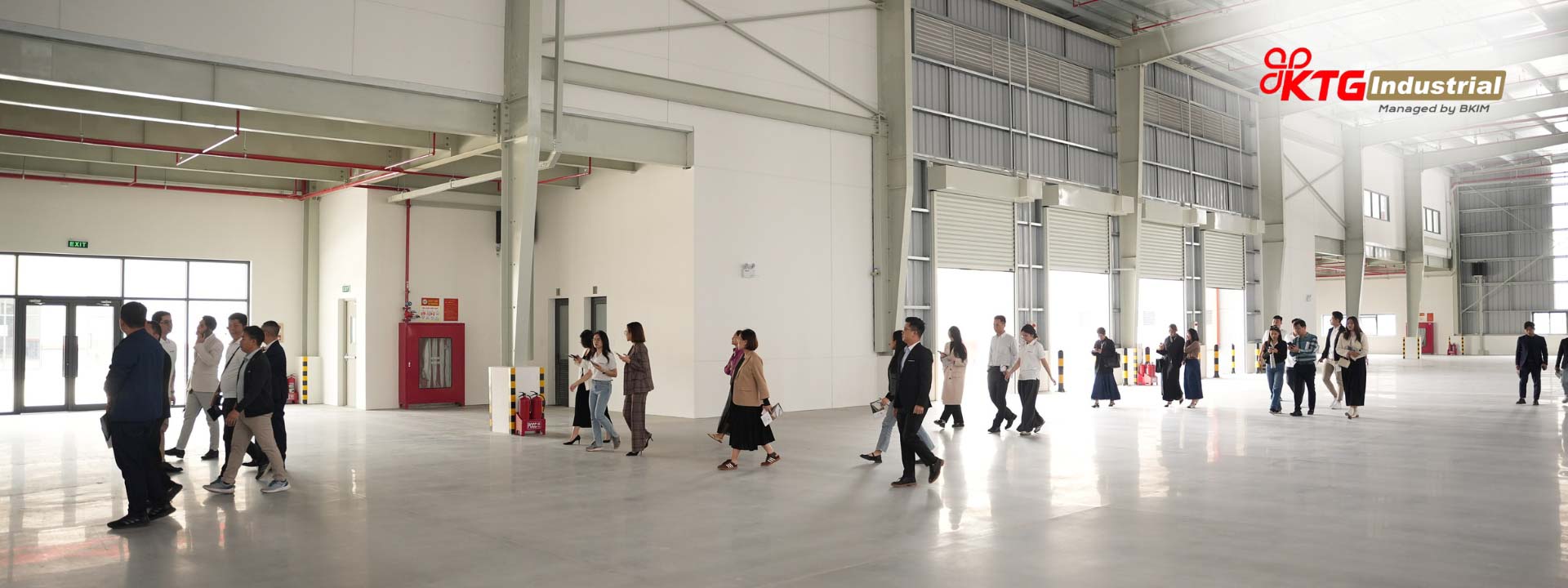
KTG Industrial is one of the pioneering companies providing industrial warehouse leasing solutions in key industrial parks such as Bac Ninh and Dong Nai. KTG Industrial’s ready-built factory, warehouses not only boast strategic locations but are also designed with large floor load capacities and high durability, meeting the demands of heavy machinery operations and modern production lines.
In terms of technical infrastructure, KTG Industrial has systematically and comprehensively invested in a fire protection system that complies with standards, ensuring safety for continuous production activities. Additionally, KTG Industrial emphasizes sustainable development. The company applies natural convection cooling methods combined with a rooftop solar power system, helping to save energy costs and reduce environmental emissions. This solution not only supports green production but also contributes to enhancing energy efficiency across the entire warehouse complex.
With the combination of a prime location, optimal structural design, and a commitment to sustainable development, KTG Industrial is becoming the ideal choice for both domestic and international businesses seeking modern, safe, and long-term effective warehouse solutions.
Conclusion
The structure of industrial warehouses not only bears the load but also directly impacts the operational efficiency and lifespan of the facility. When designed to proper standards, warehouses are easier to maintain, adapt well to environmental conditions, and flexibly meet production needs. Whether opting for steel, concrete, or a hybrid structure, businesses must adhere to current technical regulations to ensure safe, cost-effective, and sustainable investments.