

As green standards increasingly become mandatory across global supply chains, FDI enterprises are placing greater priority on projects that deliver energy efficiency and sustainable operations.
This shift is driven by both emission reduction targets and the need to strengthen long-term competitiveness.
The article below outlines KTG Industrial’s strategic journey in developing the Net Zero factory model.
Why is the “Green Factory” model becoming the new standard?
Vietnam’s Net Zero 2050 commitment
At the COP26 Conference, Vietnam committed to achieving net zero emissions by 2050 and has since introduced multiple measures to reduce emissions in key economic sectors, particularly industry and construction.
Regulatory frameworks such as QCVN standards on energy efficiency, emission monitoring and inventory requirements, as well as carbon pricing policies, are currently being updated [1].
These changes are pushing companies across supply chains to transition early toward green factory models in order to meet both domestic and international regulatory expectations.

Vietnam’s Net Zero 2050 commitment is driving businesses to adopt green factory models
ESG Pressure from FDI Enterprises
Samsung, Nike, and Nestlé are tightening ESG standards, with a strong focus on emissions and renewable energy. Consequently, Vietnamese suppliers need to demonstrate compliance from the very first stage of cooperation.
To support businesses, KTG Industrial not only provides infrastructure compliant with green standards but also delivers an All-in-One service ecosystem including legal, human resources, and accounting services.
This approach helps FDI enterprises quickly meet both domestic and international requirements.
Competitive Advantage in Attracting Foreign Capital
Green factories offer businesses more stable cost structures by enabling access to preferential green finance sources.
Furthermore, KTG Industrial is moving toward LEED Gold certification, a tier above the more common LEED Silver, which enhances project credibility and long-term sustainable value.
Specifically, LEED Gold-certified buildings can achieve average savings of 20–30% in energy and water consumption compared to conventional buildings, allowing businesses to significantly optimize long-term operating costs.
The application of LEED Gold standards combined with smart operations management systems helps attract FDI investors who prioritize sustainable development strategies.
KTG Industrial’s Green Growth Strategy
Renewable Energy Infrastructure
KTG Industrial installs rooftop solar power systems on factory buildings, transforming roof space into a clean energy source and reducing reliance on the national power grid.
This solution helps tenants lower operating costs while limiting carbon emissions during production.
Simultaneously, Industry 4.0 energy management technology monitors electricity consumption in real time, ensuring renewable energy is used efficiently.
The system optimizes operations and supports businesses in pursuing sustainability and energy savings in a smart and structured way.

KTG Industrial leverages factory rooftops to generate solar power and supply clean energy
Low-Emission Design in Operations
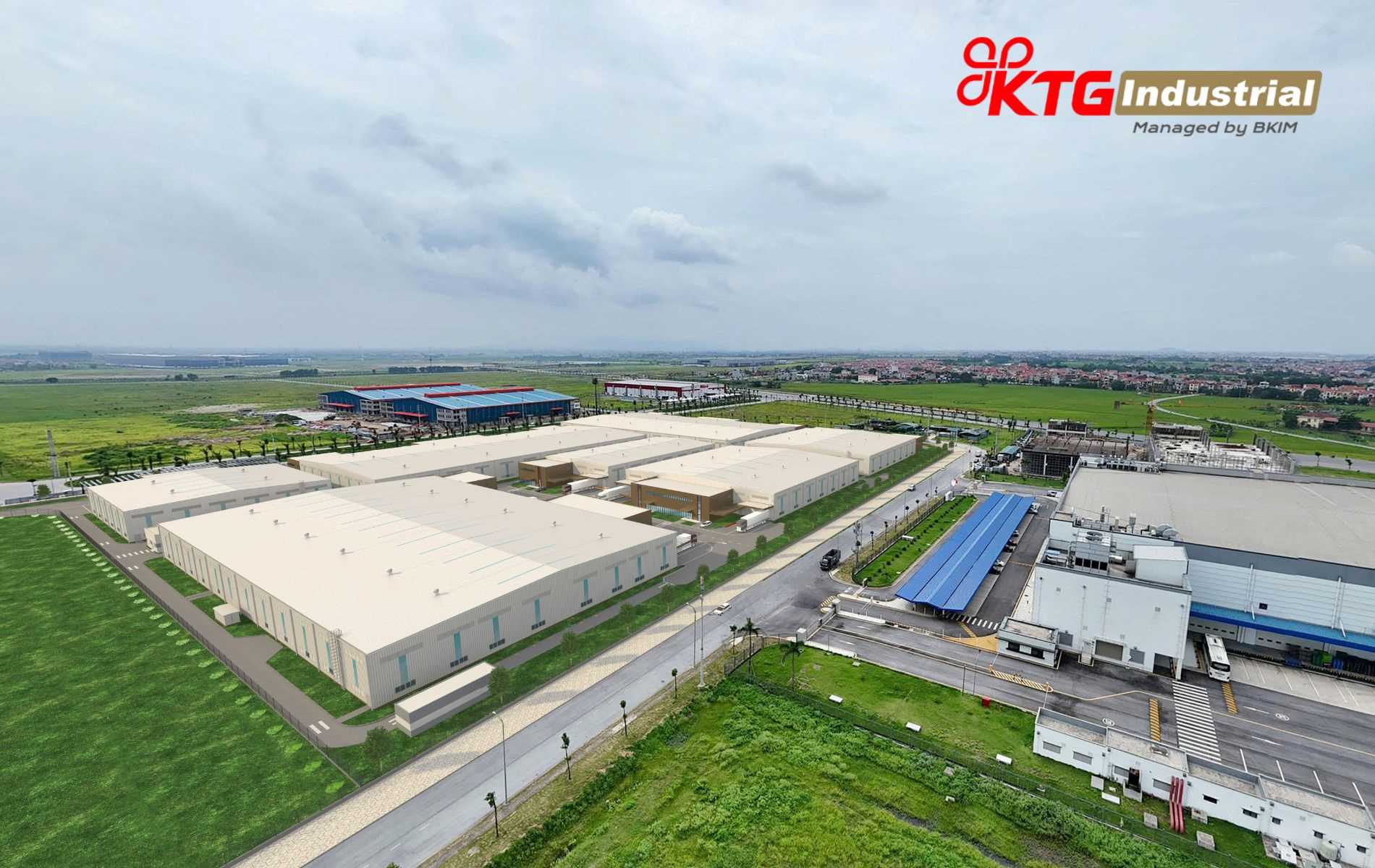
KTG Industrial’s Industry 4.0 factory model represents a new benchmark for green industrial facilities and is developed in line with strict criteria targeting LEED Gold certification by the USGBC.
KTG Industrial applies environmentally friendly materials and smart design solutions to maximize natural daylight and optimize drainage systems, thereby reducing the need for artificial lighting during operations.

KTG Industrial VSIP Bac Ninh Phase II
LED lighting systems are installed throughout both interior and exterior areas of the factory, delivering significant energy savings.
In addition, VR Factory technology allows customers and partners to conduct remote site visits via smartphones or computers, helping reduce CO2 emissions associated with travel.
At the same time, expanded green spaces and enhanced ventilation systems improve air quality and support worker health, creating a safer and more comfortable working environment.
This integrated design approach enables ready-built factories to operate efficiently, lower emissions, and meet sustainability requirements across modern supply chains.
Conclusion
KTG Industrial is among the developers advancing Net Zero factory models in Vietnam by integrating green standards, Industry 4.0 technology, and smart energy management.
This approach helps businesses reduce operating costs, limit carbon emissions, and improve operational efficiency, while meeting ESG expectations and attracting sustainability focused FDI investors.
Through these efforts, KTG Industrial remains committed to delivering modern, environmentally responsible factory solutions aligned with global industrial trends.
References
[1] Bo Cong thuong Viet Nam (2022). No luc thuc hien cac cam ket cua Viet Nam tai Hoi nghi COP26.