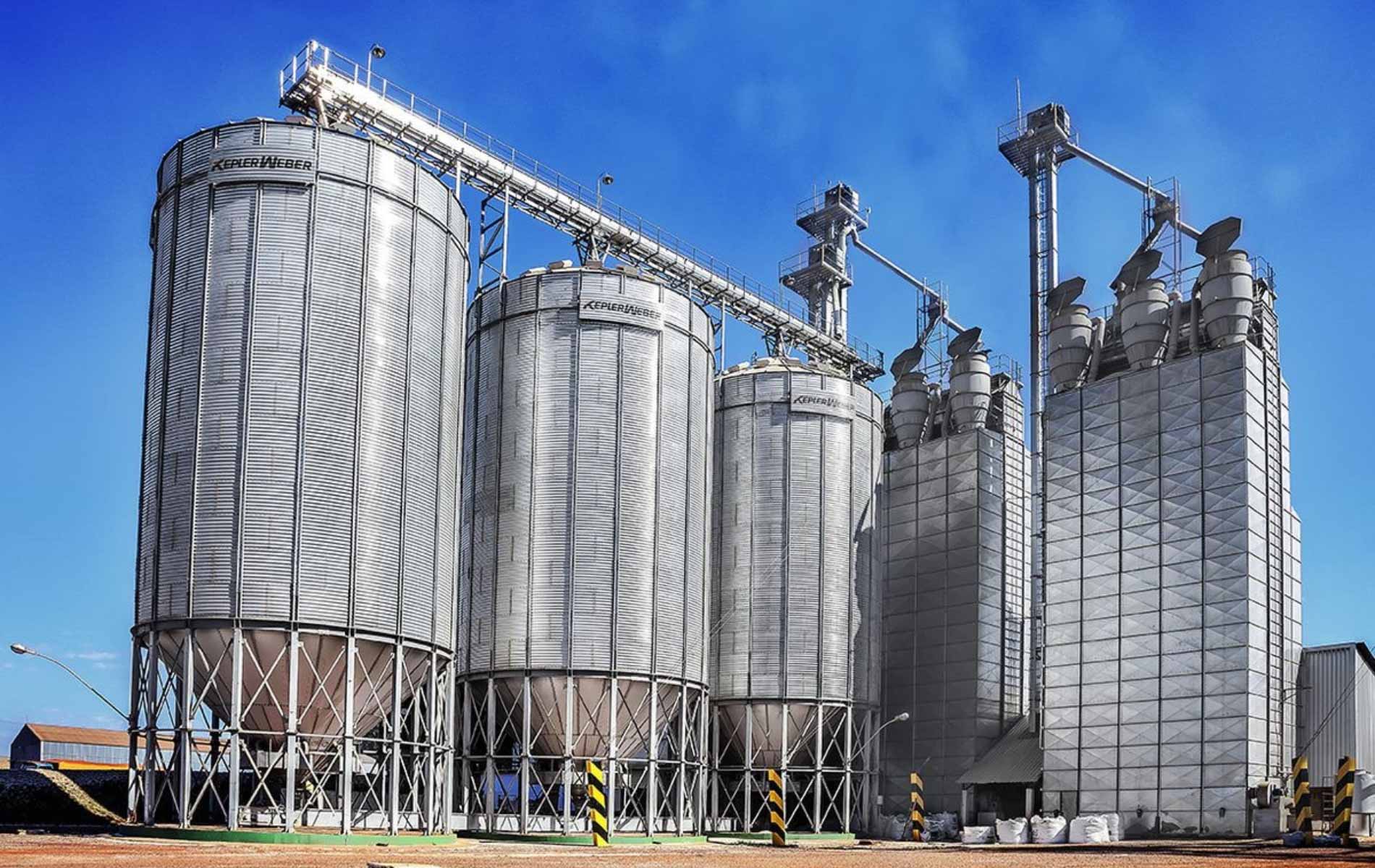



As Vietnam continues to intensify efforts to attract investment in the manufacturing sector, the demand for industrial land leasing has been steadily increasing.
However, not all enterprises fully understand the legal procedures necessary to implement their projects smoothly.
In the following article, KTG Industrial provides a detailed guide on industrial land lease procedures, from dossier preparation to contract signing, helping investors save time and avoid common legal risks.
Overview of industrial land lease demand in Vietnam
In the context of increasingly limited industrial land supply and rising land prices, leasing has become the optimal choice for many enterprises instead of outright acquisition.
Leasing helps reduce initial capital expenditure, provides greater financial flexibility, and allows businesses to expand or adjust production scale as needed.
For FDI enterprises in particular, leasing land with ready-built infrastructure shortens the implementation timeline and supports better compliance with local regulatory requirements.
According to market reports, the average occupancy rate of operating industrial parks nationwide reached approximately 86% in 2024.
In the northern region, the rate was around 80%, while the southern region recorded higher levels, ranging from 80% to more than 93%, especially in key industrial provinces such as Binh Duong and Dong Nai.
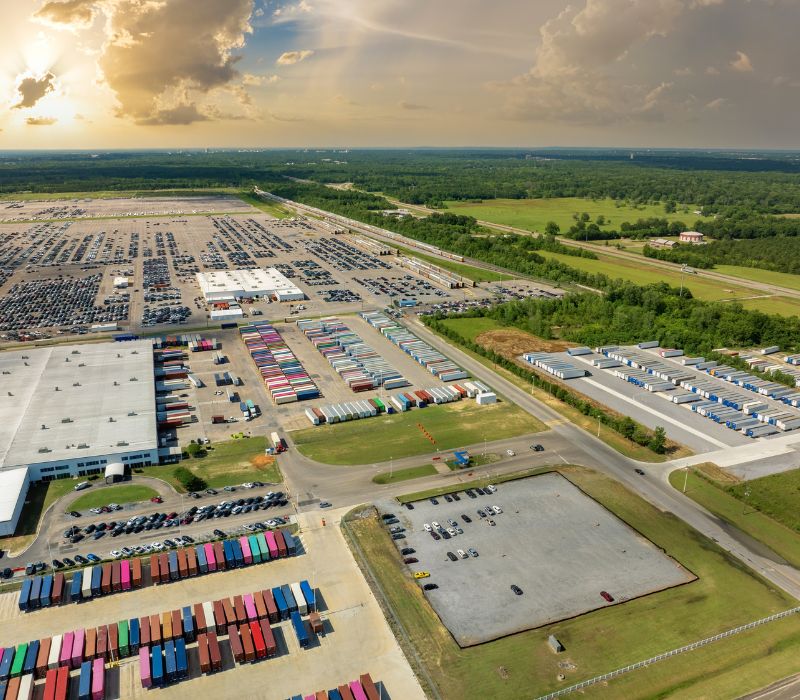
These realities highlight the need to expand industrial land supply for enterprises
Conditions enterprises must meet when leasing industrial land
Based on Article 149 of the 2013 Land Law, investors must satisfy specific conditions related to land use purpose, legal status, and current regulatory requirements in order to lease land within an industrial park.
First, the leased land must be used strictly for production purposes. This means the site must be developed for factories, warehouses, or other production facilities that align with the activities registered in the Investment Registration Certificate.
Using the land in accordance with the declared purpose is a mandatory requirement for licensing and ensures long-term operational stability.
Next, investors must fall into one of the following eligible groups:
- Economic organizations
- Domestic households or individuals seeking to expand production
- Vietnamese citizens residing overseas who wish to return and invest
- Foreign-invested enterprises collaborating with domestic partners to leverage labor and geographic advantages in Vietnam
Finally, all legal requirements related to land leasing must be met. The land parcel intended for lease must not fall within restricted categories as defined in Article 175 of the Land Law.
Lease contracts must be fully documented, transparent, notarized, and compliant with current legal procedures. At the same time, the leasing plan must align with local planning orientations and investment attraction policies.
The entity providing the land for lease must also be legally authorized and properly licensed to sublease land use rights within the industrial park.

Complying with these conditions helps investors avoid legal risks and ensures stable project implementation within industrial zones
Industrial land lease process: 5 essential steps enterprises must follow
Research and select a suitable industrial park
Before starting the land lease procedure, enterprises need to clearly identify their industry, production scale, and technical infrastructure requirements.
From there, they should select an industrial park with a strategic location, convenient transportation links, and appropriate incentive policies. Choosing the right site from the beginning helps reduce both time and project deployment costs.
Submit the land lease application and demonstrate investment capability
After selecting an industrial park, the enterprise must prepare a land lease application following the template provided by the developer or the industrial park management board.
The application includes project information, financial capacity, and implementation experience. A complete and well-prepared dossier increases the likelihood of prompt approval.
Negotiate and sign a memorandum of understanding with the developer
If the application meets preliminary requirements, the enterprise will be invited to negotiate rental pricing, lease duration, payment schedule, and other conditions.
Both parties will sign a memorandum of understanding or a principle agreement to secure leasing priority.
This document serves as the foundation for subsequent legal steps without the risk of losing the selected site.
Complete relevant legal procedures
Based on the principle agreement, the enterprise proceeds to apply for an Investment Registration Certificate, conduct an environmental impact assessment, and obtain construction permits in accordance with regulations.
Each locality may have its own specific requirements, so close coordination with the developer is essential. This ensures that the project is implemented legally and on schedule.
Sign the official lease contract and receive the site
Once all legal procedures are completed, both parties finalize and sign the official land lease contract. The developer will then hand over the site in the agreed area, condition, and timeline.
At this stage, the enterprise can commence construction and move forward with factory operations as planned.
Rights and obligations of enterprises leasing industrial land
Rights to use, transfer, and mortgage assets on the leased land
When leasing industrial land, investors are entitled to certain rights and are subject to corresponding obligations, depending on the payment method applied.
In cases where the tenant pays land rent in a single lump sum for the entire lease term, the investor is granted stable land use rights for the duration of the contract and may conduct specific transactions related to assets attached to the land.
According to Article 166 of the 2013 Land Law, tenants in industrial parks are entitled to the following rights:
- To be granted a Certificate of Land Use Rights, Ownership of Housing, and Assets Attached to Land
- To benefit from the results of their labor and investments on the land
- To receive advantages generated by state-built facilities that support the protection and improvement of agricultural land
- To be guided and supported by the state in the improvement and enhancement of agricultural land
- To be protected by the state when their lawful rights and interests regarding land are infringed upon
- To receive compensation when the state recovers land in accordance with the law
- To lodge complaints, denunciations, or initiate legal proceedings against violations of their lawful land use rights or other breaches of land regulations
Financial obligations, environmental protection, and compliance with planning
In addition to the rights granted to investors leasing industrial land, financial obligations, environmental protection, and adherence to planning regulations are mandatory requirements clearly outlined in the 2013 Land Law.
Regardless of whether land rent is paid upfront in a lump sum or annually, enterprises must fully comply with the general obligations specified in Article 170 of the law.
Specifically, enterprises must use the land for the approved purpose and must not construct facilities outside the permitted planning scope or beyond the licensed boundaries of the land parcel.
All land declaration and registration procedures, as well as procedures related to the transfer, mortgage, or capital contribution of assets attached to the land, must strictly follow legal requirements.
In addition, investors are responsible for fulfilling all financial obligations, including land rent, taxes, and related fees, in a timely manner.
During project implementation, enterprises must also implement measures to protect the land and the environment, ensuring no adverse impact on neighboring land users or the local ecosystem.
Strict compliance with environmental regulations, planning requirements, and social responsibility not only ensures legal alignment but also enhances the enterprise’s credibility and creates a foundation for sustainable project development.
Key legal considerations when leasing industrial land
When leasing industrial land, the first factor to examine is the legal status of the site.
Investors should prioritize industrial parks that already hold an Investment Registration Certificate, have been allocated land under the correct legal procedures, and are managed by an entity authorized to sublease land.
This helps avoid risks related to sites that do not meet legal requirements.
Next, the land lease contract should be carefully reviewed in terms of lease duration, rental pricing, payment methods, and the obligations of each party.
All provisions related to additional fees, contract extension, assignment, or termination must be clearly outlined.
Depending on the agreement, the contract may or may not require notarization, but all information must be accurate and complete in order to ensure legal validity.
Enterprises must also fulfill financial obligations on time and comply with the approved planning.
During land use, all regulations on environmental protection, occupational safety, and fire prevention and control must be strictly observed. Preparing all legal aspects from the outset helps ensure smooth and sustainable project execution.
Why choose KTG Industrial?
KTG Industrial focuses on developing ready-built factories and build-to-suit facilities in industrial parks across Vietnam.
The infrastructure is comprehensively invested with electricity, water, telecommunications, wastewater treatment systems, and supporting amenities such as logistics and maintenance services.
With projects located in strategic areas near major production hubs and key transportation routes, KTG Industrial enables enterprises to quickly put their factories into operation, optimizing both time and deployment costs.
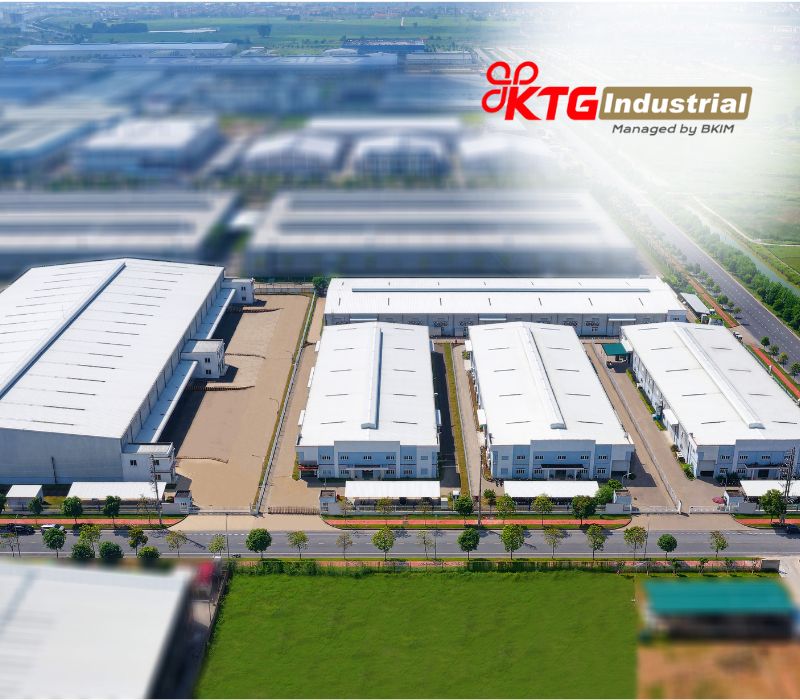
KTG Industrial is a trusted provider in the industrial real estate sector
Conclusion
Leasing industrial land is a strategic step for manufacturing and export-oriented enterprises in Vietnam.
However, for the process to run smoothly, investors must prepare thoroughly in terms of legal compliance, financial capability, and the selection of a reliable infrastructure partner.
Understanding the required procedures, conditions, and key considerations not only helps businesses save time and costs but also establishes a foundation for stable and compliant long-term operations.