


Instead of traditional criteria such as location or cost, green certification is emerging as a new benchmark for evaluating industrial parks.
Green certification rates in Vietnam’s industrial sector demonstrate infrastructure readiness, energy use, and ESG requirements in attracting high quality FDI. The following article by KTG Industrial explores this trend.
Current green certification rates in Vietnam industrial parks
Industrial park transformation (Infrastructure level)
At present, green certification rates in Vietnam industrial parks remain modest.
Vietnam has hundreds of established industrial parks, yet very few meet green building standards like LEED or follow ecological models.
Specifically, there are only about 7 ecological industrial parks out of more than 397 nationwide, representing less than 2 to 3% of the total [1].
Breakthrough at the building level (Factories and warehouses)
Meanwhile, green buildings in the industrial sector, including factories and warehouses, account for more than 50% of the total number of certified green buildings, although the specific ratio for individual factory units has yet to be finalized [2].
Compared to the residential sector, which has more than 500 green building projects nationwide, industrial park infrastructure still lags behind in both the number of certifications and the scale of application [3].
Common green standards
In terms of widely applied standards, LEED is currently selected and prioritized by many projects, particularly at the Gold and Silver levels, while LOTUS is increasingly being adopted in industrial parks oriented toward ecological models.
Regional map of industrial “greening”
Several localities are taking the lead in the development of Vietnam green industrial zones.
In the North: Bac Ninh stands out with projects such as KTG Industrial VSIP Bac Ninh 2 phase 1, which has achieved LEED Gold certification, offering a premier green factory environment in Vietnam for tenants.
In the South, Binh Duong and Dong Nai have shown significant progress through renewable energy-focused models. Notably, in Long An, multi-story factory models help optimize land use by up to 40%, meeting sustainability standards.
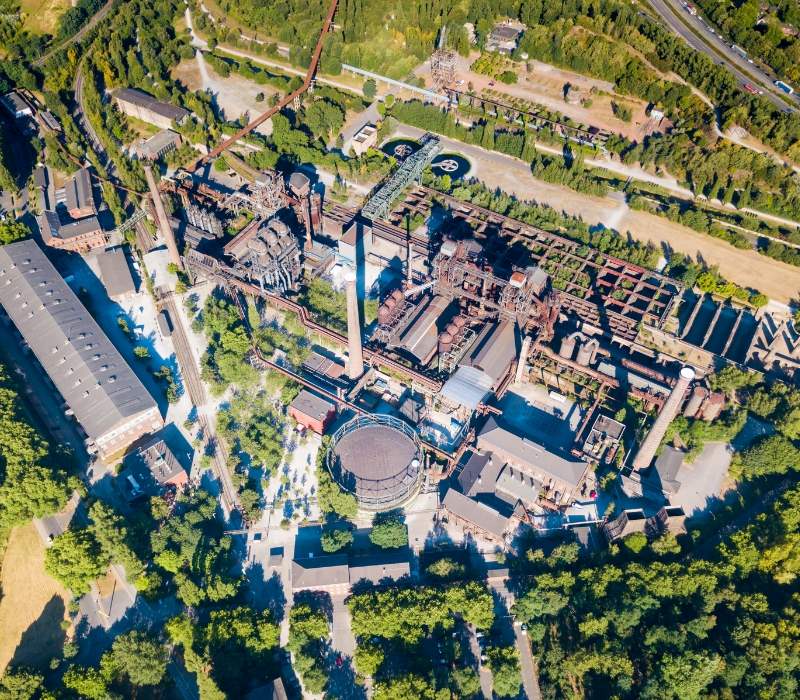
Many localities are leading the development of green industrial parks by region
Drivers and barriers to “greening”
Demand from FDI enterprises is the main driver, with around 70% willing to accept rental rates that are 7 to 10% higher for green production spaces.
In addition, pilot projects have demonstrated clear efficiency, with the potential to save up to 22,000 MWh of electricity per year.
However, high initial investment costs and complex certification processes remain challenges, requiring both developers and tenants to adopt long-term strategies.
KTG Industrial – Green industrial real estate solutions in Bac Ninh and Dong Nai
In Bac Ninh and Dong Nai, KTG Industrial focuses on developing ready-built factory and warehouse projects aligned with green industrial real estate orientation, contributing to improving green certification rates in Vietnam industrial parks.
These projects are invested with integrated infrastructure, emphasize efficient energy use, and allow for easy deployment of rooftop solar power and resource-saving solutions.
By integrating ESG criteria and ecological industrial park orientation, enterprises can reduce emissions, optimize operations, and meet long-term Net Zero targets.
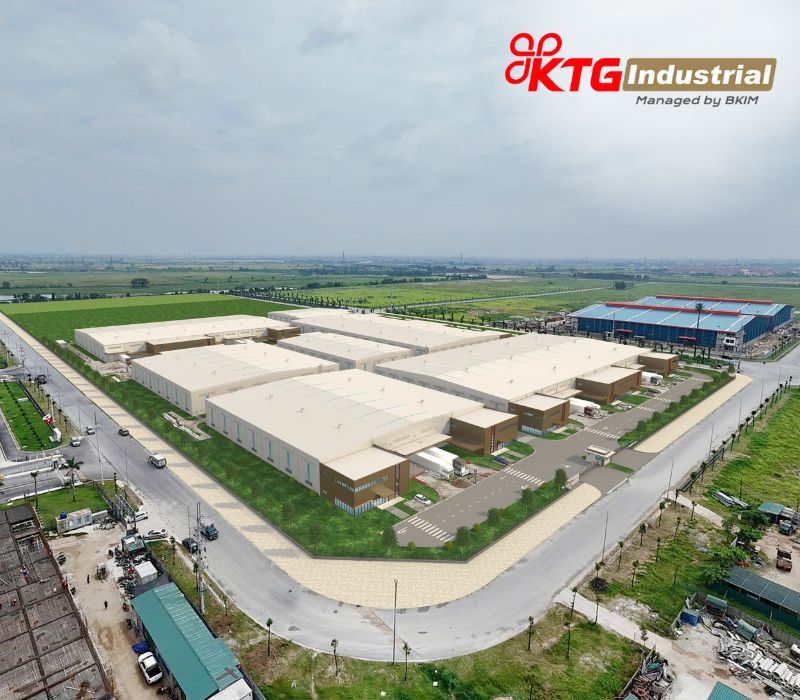
KTG Industrial promotes green industrial real estate in Bac Ninh and Dong Nai
Conclusion
Increasing green certification rates in Vietnam industrial parks are gradually becoming an important indicator of competitiveness and the ability to attract high quality FDI.
Investing in green infrastructure, applying ESG standards, and developing ecological industrial parks not only align with Net Zero trends but also create a foundation for long-term sustainable growth in the industrial real estate market.
References
[1] Tap chi Doanh nghiep (2024). Industrial real estate is keeping pace with the green growth trend.
https://www.vietnam.vn/en/bat-dong-san-khu-cong-nghiep-bat-nhip-xu-huong-tang-truong-xanh
[2] M.T (2025). Viet Nam co 559 cong trinh xanh. Tap chi Kinh te Moi truong.
https://kinhtemoitruong.vn/viet-nam-co-559-cong-trinh-xanh-96525.html
[3] Toan Thang (2025). Viet Nam co 13,6 trieu m2 san xay dung dat chung nhan xanh. Bao dien tu Chinh phu.