

An industrial estate with energy saving capabilities is increasingly preferred by businesses seeking to comply with ESG standards and achieve carbon neutrality goals.
In particular, given the Vietnamese Government’s commitment to achieving Net-Zero emissions by 2050, alongside the transition toward eco-industrial park models in key industrial hubs such as Dong Nai, Hai Phong, Binh Duong, and Bac Ninh, establishing facilities in an industrial estate with energy saving infrastructure is no longer merely an option, but an essential requirement.
In this article, KTG Industrial highlights the emerging trends of developing an industrial estate with energy saving solutions in Vietnam, as well as the models and systems currently being implemented to optimize manufacturing operations.
Models of energy-efficient industrial parks in Vietnam
Energy-efficient industrial parks in Vietnam are being developed through a combination of green infrastructure, renewable energy, and digital technology. This model aims to optimize operational costs while supporting businesses in meeting ESG criteria and long-term carbon reduction targets.
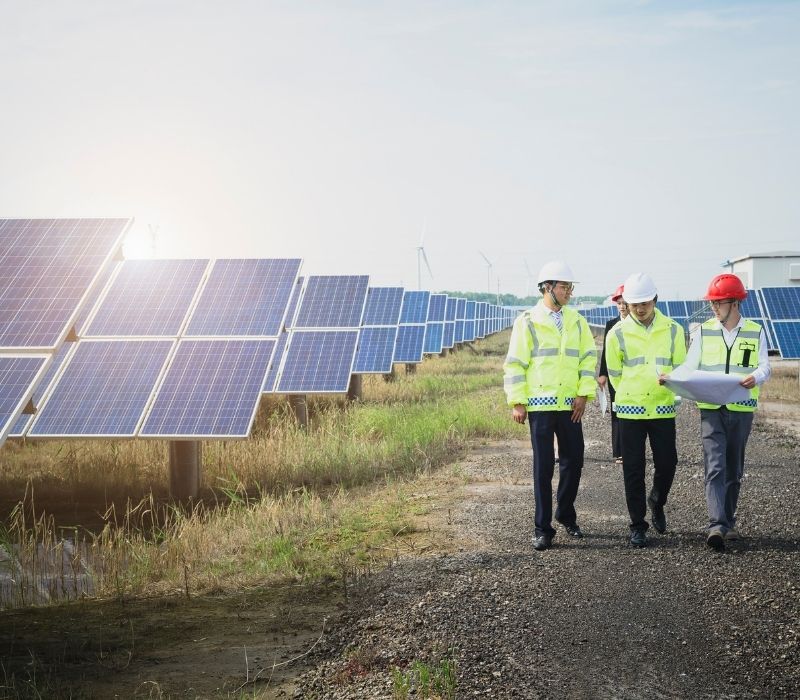
Renewable energy and digital technology driving sustainable industry
Renewable energy infrastructure and direct power purchase agreements (DPPA)
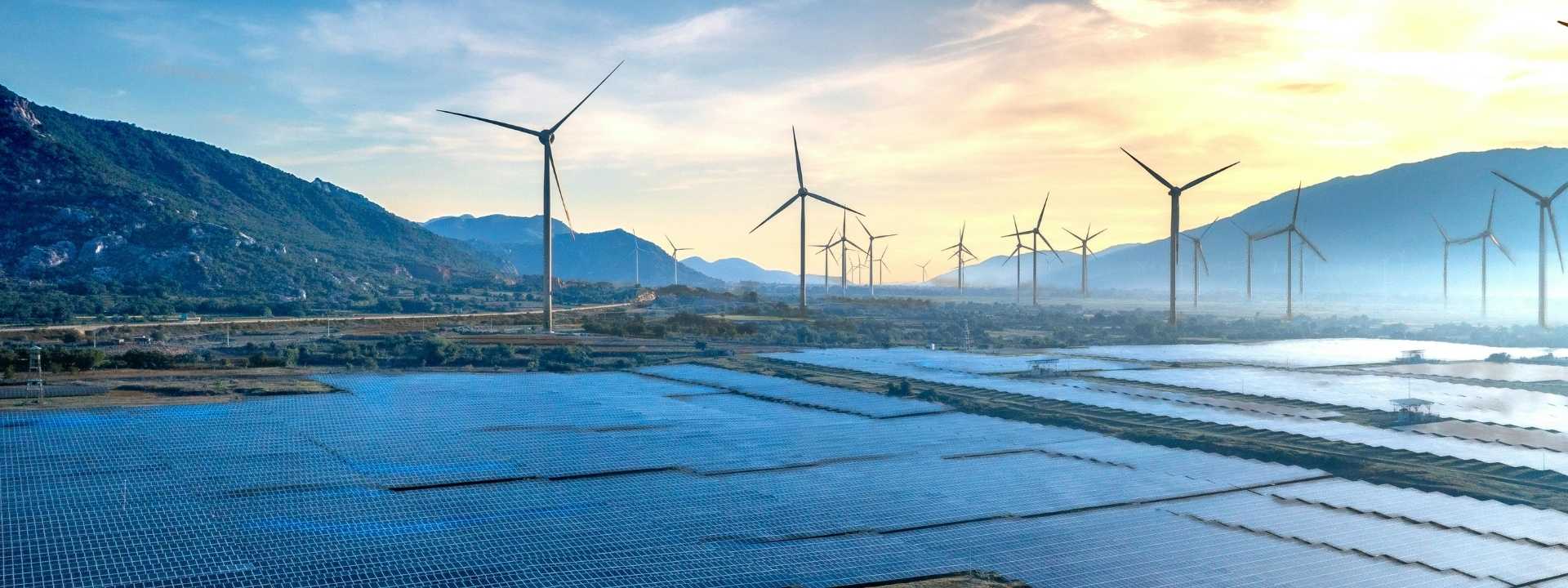
Many industrial parks are now pre-planned to accommodate rooftop solar systems paired with Battery Energy Storage Systems (BESS). This solution enables businesses to gain greater energy independence, reduce reliance on the national grid, and boost energy efficiency.
Additionally, Decree 57/2025/ND-CP on the Direct Power Purchase Agreement (DPPA) mechanism allows eligible enterprises to purchase electricity directly from renewable energy generators without going through traditional power distribution channels.
This mechanism opens up broader access to clean energy for export-oriented enterprises – particularly in electronics and high-tech sectors – as ESG compliance becomes increasingly critical.
Green and internationally certified factory design (LEED, EDGE)
Factories within energy-efficient industrial parks are typically designed in accordance with standards such as LEED or EDGE, targeting resource efficiency right from the construction phase.
A widely adopted approach is passive design, which leverages natural ventilation, skylights, and roof lighting panels to cut electricity consumption for daytime lighting and cooling.
Notably, the effective application of passive design solutions can help reduce a building’s energy consumption by up to 70% [2].
Furthermore, building envelopes utilize thermal insulation materials and heat-reflective paint to minimize heat absorption, tailored specifically to Vietnam’s hot and humid climate.
Smart energy management systems (Smart Monitoring & IoT)
Many industrial parks are deploying AI, IoT, and Energy Management Systems (EMS) to monitor electricity and water consumption alongside operational metrics in real time.
Field implementations show that utilizing IoT for energy monitoring helps detect leaks early, immediately trimming approximately 5% of wasted initial energy costs [1].
Combined with digital metering, businesses can easily analyze load profile charts and shift production schedules to off-peak hours, optimizing overall electricity bills.
District cooling systems and the circular economy
Pioneer industrial parks are adopting District Cooling systems to supply chilled water across the entire zone, eliminating the need for individual factories to install separate chiller systems. This model increases cooling efficiency, saves floor space, and lowers maintenance costs.
Additionally, circular economy principles and industrial symbiosis are being actively promoted:
- Reusing waste heat or steam from one factory’s production process as an input for another.
- Transitioning to biomass energy to replace fossil fuels.
- Reusing treated wastewater for irrigation and infrastructure cooling to minimize natural resource depletion.

Reusing energy, water, and resources in green industrial parks
Comparison map of prominent green industrial parks (North – Central – South)
| Industrial Park / Developer | Geographical location | Key energy solutions | Certifications held | Best suited industries |
| VSIP III (Binh Duong) | South | Smart IP planning, infrastructure ready for rooftop solar integration and energy-saving solutions | Aiming for green building standards such as LEED | Electronics, semiconductors, high-tech manufacturing |
| DEEP C (Hai Phong / Quang Ninh) | North | Wind power, solar power, water reuse, industrial symbiosis, and emission reduction solutions | Eco-Industrial Park (EIP) | Heavy industry, light industry, and supporting industries |
| Industrial Park Vietnam / Core5 / Frasers | Nationwide (Ready-Built Factories – RBF) | Ready-built factories integrated with energy-saving designs, optimizing daylighting and natural ventilation | Selected projects achieving or targeting green certifications like LEED, EDGE | FDI tenants, logistics, component assembly |
| KTG Industrial | North & South | Ready-Built Factories & Warehouses (RBF/RBS) optimizing natural lighting design, ready for rooftop solar grid connection | Aiming for LEED and ESG standards | FDI tenants, logistics, component manufacturing |
Related article : Green Industry: Economy, Mobility, and Ecology
Financial benefits and roadmap for FDI investors
Choosing to establish factories in energy-efficient industrial parks delivers dual financial and operational benefits for FDI investors:
Operational cost optimization: Research indicates that potential energy savings in Vietnam’s industrial manufacturing currently reach 20–30% [3]. Although initial lease rates at green industrial parks may be slightly higher, businesses will quickly recoup their investment through substantial monthly savings on electricity and water utility bills.
Overcoming trade barriers: Utilizing energy-efficient infrastructure helps enterprises proactively collect emissions data, ensuring readiness for the EU’s Carbon Border Adjustment Mechanism (CBAM) and other stringent international markets.
Accessing green finance: Businesses operating in industrial parks certified with LEED or EDGE find it easier to secure green credit packages offering preferential interest rates from international financial institutions.
Conclusion
Energy efficiency is no longer a short-term choice; it has become a critical survival factor that helps businesses enhance competitiveness and comply with global ESG standards.
When selecting a factory location in Vietnam, investors should prioritize evaluating three factors: rooftop solar connection readiness, resource management and recycling systems, and the green building certifications committed to by the developer.
Aligned with sustainable industrial real estate development, KTG Industrial provides green-certified Ready-Built Factories & Warehouses (RBF/RBS) in key economic zones. We are ready to partner with FDI enterprises to optimize operational costs right from day one.
References
[1] Mediatech. (2023). Dung IoT phat hien lang phi dien, nuoc. Bacninhtv.Vn. https://bacninhtv.vn/tin-tuc/213/151130/dung-iot-phat-hien-lang-phi-dien-nuoc
[2] touyen. (2024, May 11). Chien luoc thiet ke thu dong giam luong khi thai carbon co thuc su hieu qua? – Tap chi Kien Truc. Tap Chi Kien Truc – Hoi Kien Truc Su Viet Nam. https://www.tapchikientruc.com.vn/chuyen-muc/chien-luoc-thiet-ke-thu-dong-giam-luong-khi-thai-carbon-co-thuc-su-hieu-qua.html
[3] Tia sang, T. (2024, December 25). Du dia tiet kiem nang luong trong cong nghiep con rat lon. Tiasang.Com.Vn; EsportsFan. https://tiasang.com.vn/du-dia-tiet-kiem-nang-luong-trong-cong-nghiep-con-rat-lon-5037690.html