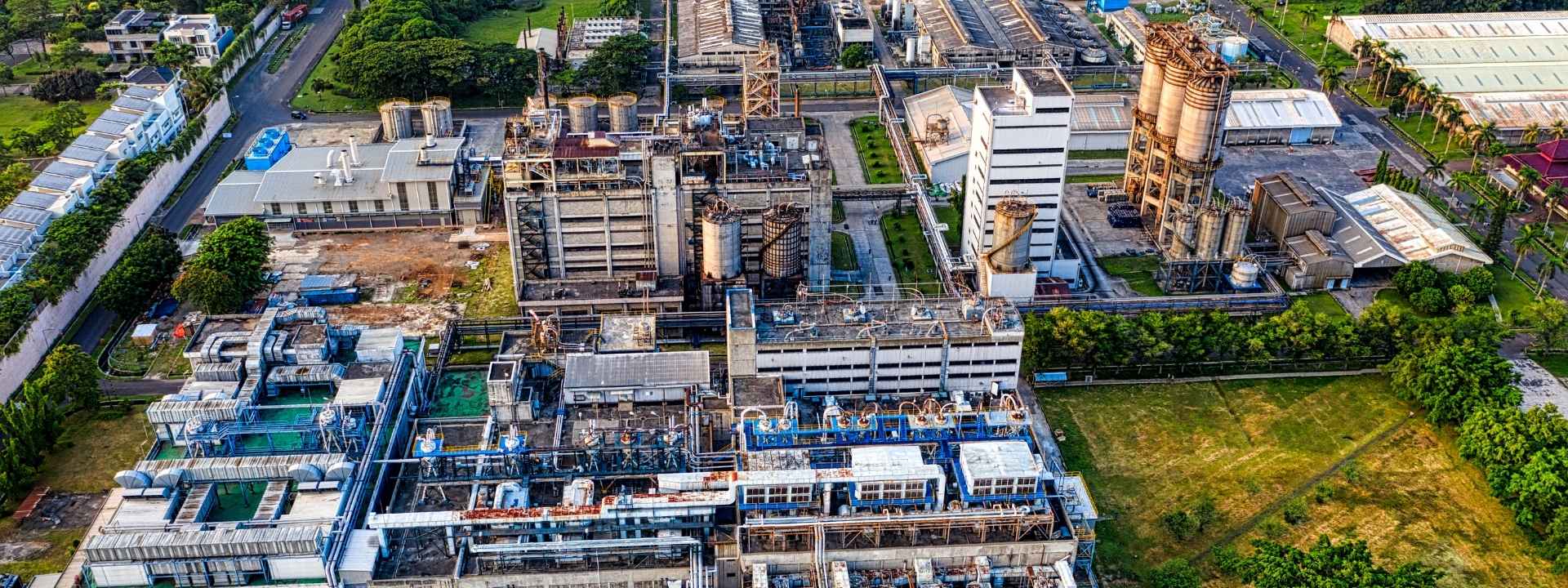


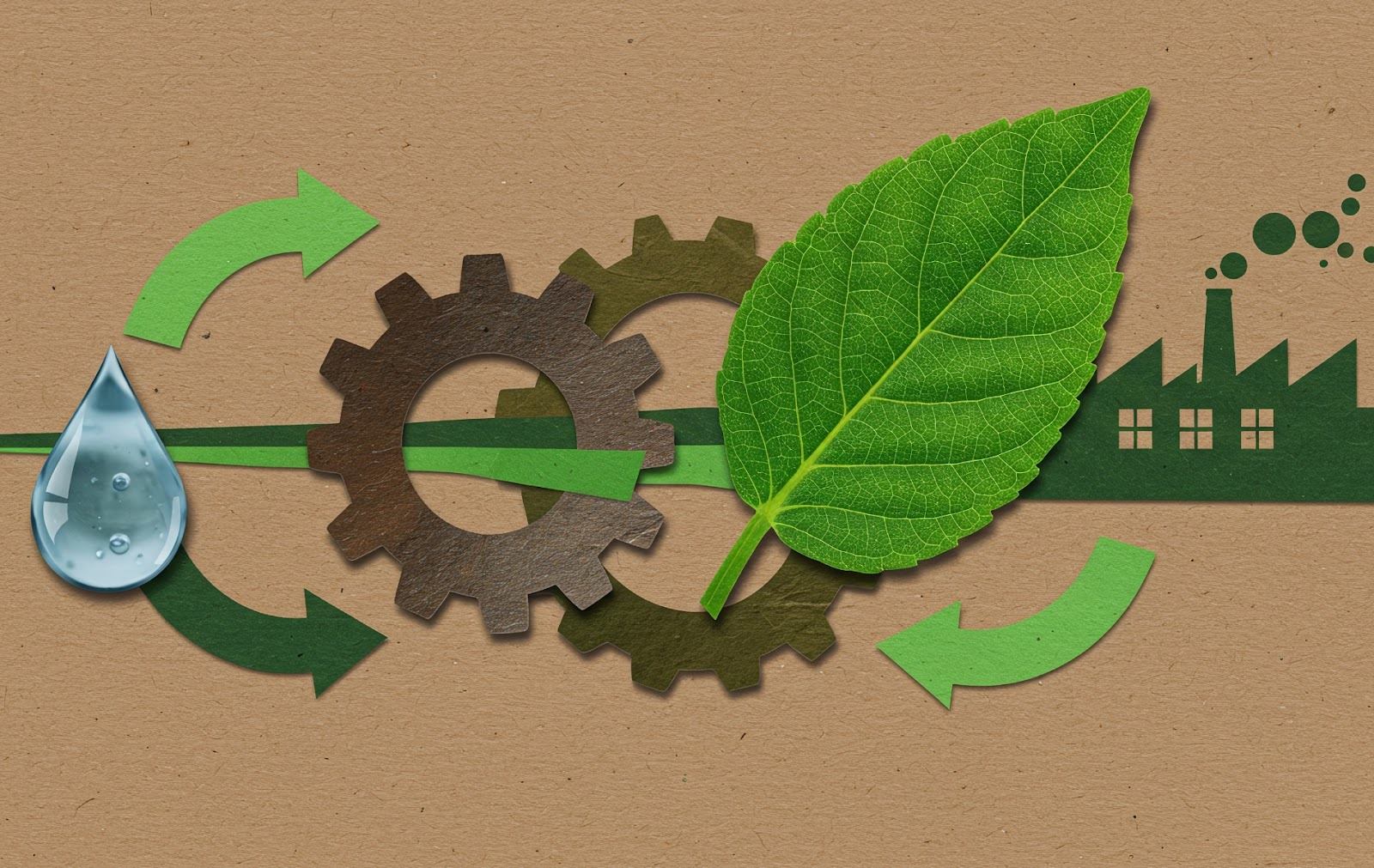
Sustainable industrial space is drawing growing attention as Vietnam moves toward the Net Zero 2050 target.
From Eco-Industrial Parks and the Circular Economy to the application of Green Hydrogen and ESG certification, businesses are facing a range of new barriers.
In this context, KTG Industrial offers a practical perspective on sustainable industrial space in the following article.
What defines sustainable industrial infrastructure?
“Green” technical infrastructure planning
Green technical infrastructure planning is the core foundation of sustainable industrial space.
From the outset, industrial parks need to allocate land reserves for on-site recycling, wastewater treatment, and waste management, thereby reducing pressure on urban infrastructure and aligning with the Circular Economy approach.
At the same time, planning must account for future energy needs.
Infrastructure should be ready to accommodate Green Hydrogen, rooftop solar power, and Battery Energy Storage Systems (BESS).
These components play a critical role in stabilizing internal power grids as the share of renewable energy increases, contributing to the Net Zero 2050 objective.
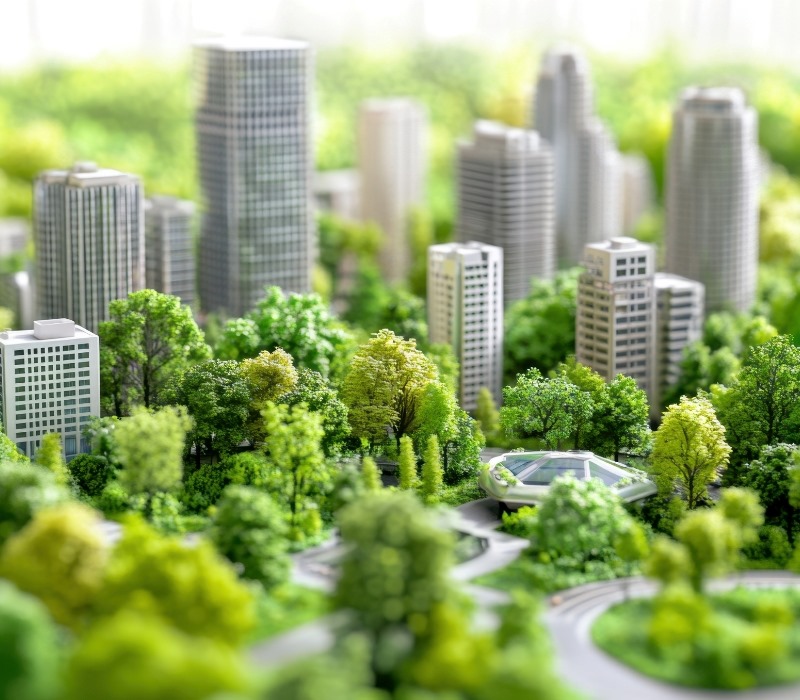
Green infrastructure as the foundation of sustainable industrial parks
Technology-driven management
Another defining characteristic is technology-driven management.
The application of AI and big data enables emission control, energy consumption monitoring, and the automation of energy audits and carbon footprint tracking.
This approach not only improves operational efficiency but also supports businesses in meeting ESG certification requirements.
Industrial symbiosis
Industrial symbiosis is an essential element of the Eco-Industrial Park model.
By connecting material and energy flows among enterprises, the output of one company can become the input of another, optimizing resource use and reducing emissions across the entire system.
Drivers and economic benefits of sustainable industrial infrastructure
Pressure from global markets and the CBAM mechanism
Under increasing pressure from global markets, the demand to shift infrastructure toward greener models is becoming urgent.
Once CBAM is implemented, enterprises operating in industrial parks will struggle to maintain exports to the EU if emissions are not properly controlled.
As a result, sustainable infrastructure is no longer a directional option but has become a mandatory requirement.
Access to green capital and ESG standards
Meeting ESG standards enables businesses to improve their ability to list and access green financing sources.
Accordingly, ESG-compliant infrastructure serves as a critical foundation supporting long-term capital mobilization strategies.
Optimizing operating costs and enhancing competitiveness
From a direct economic perspective, sustainable industrial infrastructure helps reduce operating costs through circular economy solutions and more efficient use of energy and resources.
At the same time, compliance with green standards enhances competitiveness when exporting to markets with increasingly stringent environmental requirements.
Market pressure and economic benefits are driving the transition to sustainable industrial infrastructure
Existing barriers and challenges
Gaps in the legal framework and administrative procedures
Despite its strong potential, the development of sustainable industrial space continues to face multiple barriers.
Policy-related issues are a primary concern, as regulations recognizing Eco-Industrial Parks remain inconsistent, while administrative procedures are not yet sufficiently simple or transparent, causing delays in project implementation.
Investment cost challenges and profit pressure
Developing modern infrastructure integrated with green technologies requires significantly higher upfront capital compared to traditional models.
This presents a major challenge for many investors who are still under heavy pressure to deliver short-term profits and achieve faster payback periods.
The lack of dedicated financial support mechanisms makes the process of “greening” an economic burden for enterprises with limited resources.
Limitations in technical infrastructure and power grids
From a technical standpoint, transitioning from traditional industrial park models to greener ones faces multiple constraints, ranging from legacy designs to the integration of new technologies.
In particular, power grid infrastructure remains a major challenge, as connecting rooftop solar systems to the national grid within industrial parks is still constrained by regulations and technical standards.
Data bottlenecks and greenhouse gas inventory challenges
The absence of a unified data system to establish baseline emissions across entire industrial parks complicates greenhouse gas inventory work and the long-term monitoring of emission reduction progress.
KTG Industrial – Sustainable industrial real estate solutions
As the Net Zero 2050 target gradually moves toward implementation, KTG Industrial is allocating resources to develop sustainable industrial infrastructure and optimize long-term operational performance.
From the planning stage, KTG Industrial’s ready-built warehouses and factories are designed to maximize the efficient use of energy, water, and construction materials.
At the same time, infrastructure systems are engineered to be ready for the integration of new energy solutions such as rooftop solar power, battery energy storage systems (BESS), and the potential application of Green Hydrogen in the future.
Beyond physical infrastructure, the application of technology and data-driven management enables KTG Industrial to support enterprises in approaching ESG certifications, improving operational efficiency, and meeting increasingly stringent environmental standards.
This forms the foundation for building a sustainable industrial ecosystem that delivers tangible value to both investors and the wider community.
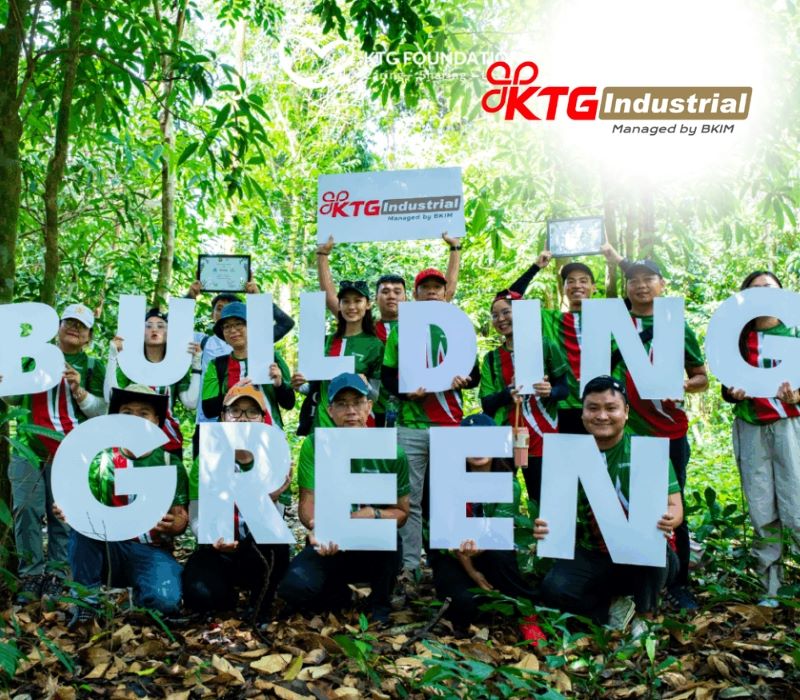
KTG Industrial is oriented toward green and sustainable infrastructure, contributing to environmental protection goals
Conclusion
Sustainable development requirements are setting new benchmarks for modern industrial infrastructure. Beyond supporting manufacturing activities, infrastructure must adapt to environmental, energy, and long-term operational demands.
By clearly identifying barriers, leveraging market-driven momentum, and investing in the right direction, enterprises can strengthen their competitiveness while moving closer to the Net Zero 2050 objective.