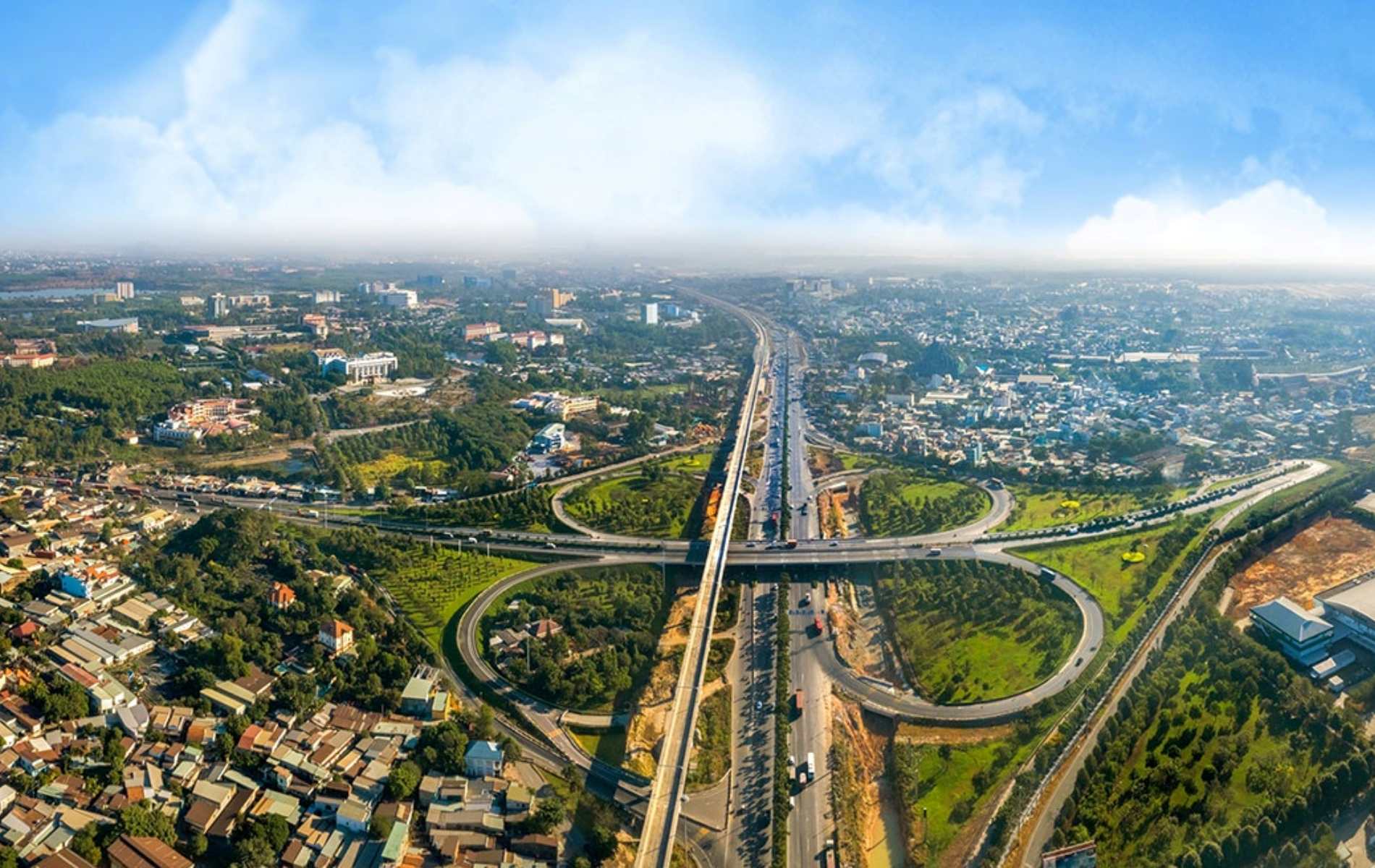


Built on the three elements of economy, transport, and ecology, the green industrial real estate model is gradually taking shape as a new option in Viet Nam.
Beyond improving operational efficiency, this model also strengthens competitiveness through well-organized transport systems and balanced ecological planning.
Accordingly, KTG Industrial will clarify the structure and core values of this model in the following content.
Three main pillars
Pillar 1: Circular Economy
The circular economy in industrial development refers to organizing production in a way that reduces new resource extraction and extends resource life cycles.
Instead of the linear model of extract, produce and dispose, enterprises shift toward maximizing the reuse of water, waste and energy, thereby reducing costs and long-term environmental pressure [1].
In practice, many industrial parks have applied specific solutions such as reusing treated wastewater back into production processes or utilizing waste and by-products.
For example, glass powder generated from manufacturing activities is used as backfilling material, while green waste is composted to produce fertilizer for nurseries, forming a closed-loop cycle within the industrial park.

The circular economy helps industrial parks reduce costs while optimizing resources and environmental performance
Pillar 2: Green Mobility
Green mobility in industrial parks focuses on reducing emissions from daily transportation and operational activities.
Instead of relying on fossil fuels, new-generation industrial parks prioritize clean mobility solutions while integrating transportation into the overall master plan to optimize internal traffic flows.
In practice, many developers have electrified their operational fleets, ranging from electric cars to electric motorbikes used for internal operations.
At the same time, infrastructure is developed in a synchronized manner with electric vehicle charging stations and supporting facilities, creating a foundation for reducing fossil fuel consumption and gradually establishing a sustainable transportation system within industrial parks [2].
Pillar 3: Biodiversity Conservation
Biodiversity conservation in industrial parks is no longer a supporting factor, but has become an integral part of sustainable development planning.
Rather than focusing solely on hard infrastructure, modern industrial parks emphasize balancing production activities with natural ecosystems [3].
In reality, many projects prioritize a high proportion of native vegetation, combined with ecological corridors running throughout the industrial park.
Dedicated nurseries for native plant species help vegetation adapt more effectively, improve survival rates, and support natural growth.
In addition, nature-based infrastructure such as constructed wetlands and diverse green cover not only enhances the landscape, but also supports natural drainage, reduces flooding, and increases resilience to climate change.

Biodiversity conservation helps industrial parks maintain ecological balance and achieve sustainable development
KTG Industrial – Sustainable industrial real estate solutions
KTG Industrial pursues an industrial real estate development strategy closely aligned with ESG standards and international green certifications such as LEED.
Rather than focusing solely on operational efficiency, the company integrates environmental, social, and governance factors from the early stages of planning and design through to project operation.
A clear example is the KTG Industrial VSIP Bac Ninh II project, which achieved LEED Gold certification, accompanied by a 10 hectare reforestation campaign with 5,000 trees launched in celebration of World Environment Day.
This initiative not only contributes to improving the local ecosystem but also demonstrates KTG Industrial’s long-term commitment to supporting the Net Zero 2050 goal.

KTG Industrial and its reforestation project, advancing sustainable industrial real estate
Conclusion
The green industrial real estate model is demonstrating a more comprehensive approach to industrial park development in Vietnam.
When circular economy practices optimize resource use, green mobility reduces operational pressure, and biodiversity conservation provides a long-term foundation, industrial parks are no longer just production zones but also spaces for sustainable development.
References
[1] Trinh Ngoc Tuan – Ths. Tran Van Tuan – Ths. Ngo Thi Nhip (2021). Thuc day kinh te tuan hoan trong cong nghiep o Viet Nam, mot giai phap bao ve moi truong va phat trien ben vung. Tap chi Cong thuong.
[2] Phuong Nhi (2025). Khuyen khich su dung phuong tien giao thong xanh. Bao Dien tu Chinh phu.
https://baochinhphu.vn/khuyen-khich-su-dung-phuong-tien-giao-thong-xanh-102250108170914438.htm
[3] Minh Hanh (2025). Xay dung hanh lang sinh thai de bao ton da dang sinh hoc. Bo Nong nghiep va Moi truong.